Brow Lamination vs Microblading: Cost, Commitment, and Results Compared
Published on May 28, 2026

If your brows are the feature you keep fussing over, two treatments dominate the conversation: brow lamination and microblading. They get mentioned in the same breath, usually as rivals, but that framing is misleading. One is a styling treatment that reshapes the hair you already have. The other is a semi-permanent tattoo that builds brows where hair is missing. Choosing between them starts with understanding that they solve different problems, then weighing cost, downtime, and how long you want to commit.
One Reshapes Hair, the Other Marks Skin
The single most important distinction is what each treatment actually touches. Brow lamination works entirely on the hair. A technician applies a chemical solution (essentially a perm for your brows) that softens the structure of each hair so it can be brushed into a new direction, then a second solution sets it in place. Nothing is implanted, no skin is broken, and the effect grows out on its own.
Microblading works on the skin. A handheld blade of fine needles deposits pigment into the upper layers of the skin in hair-like strokes, creating the look of individual brow hairs. Because the pigment sits in the skin rather than on the surface, it is classified as semi-permanent and fades slowly over years rather than weeks. For a fuller look at how microblading stacks up against pencils, powders, and tinting, see our guide to microblading versus traditional eyebrow techniques.
How Brow Lamination Works
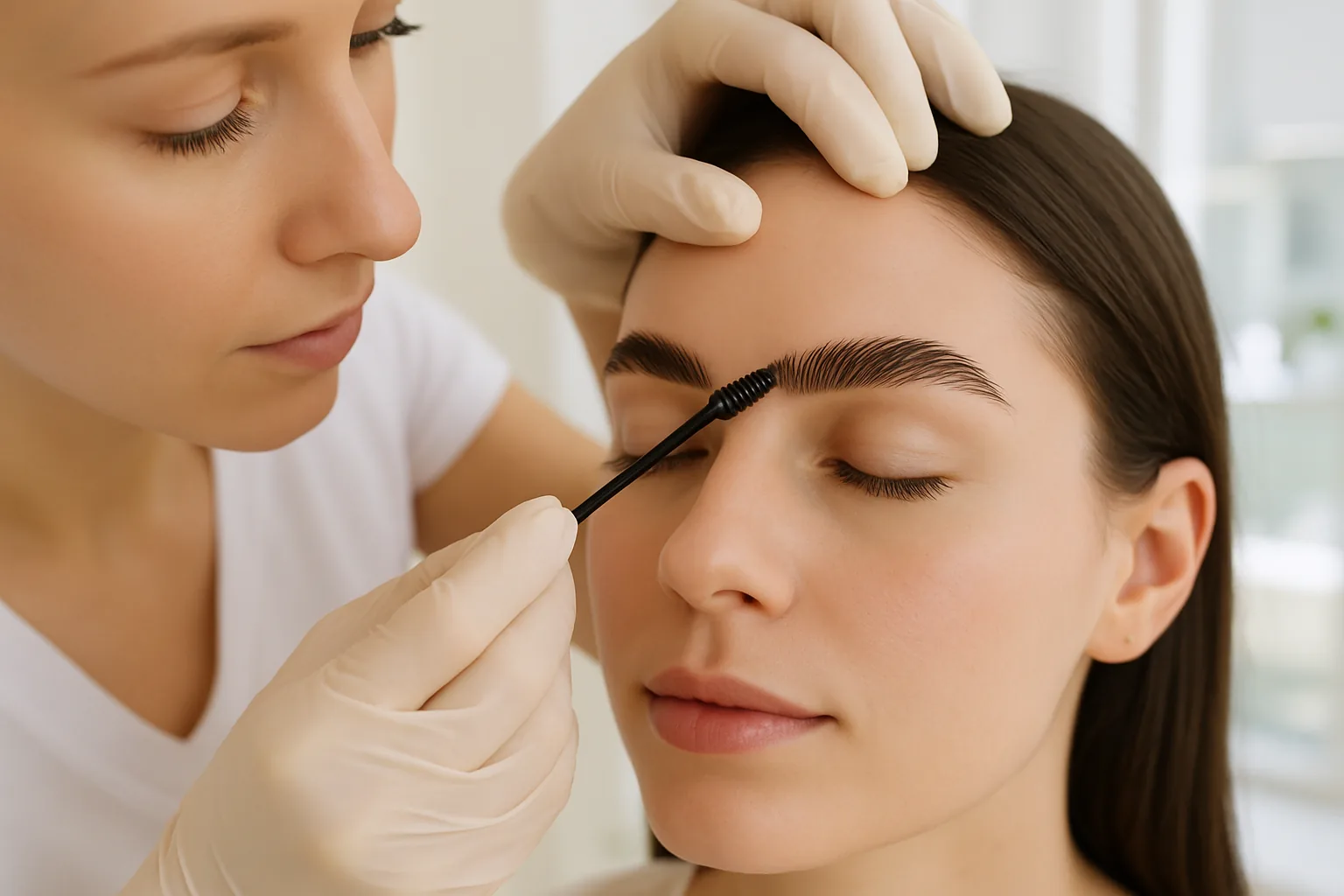
A lamination appointment takes about an hour and involves no needles and no numbing. The technician cleanses the brows, applies a lifting lotion that relaxes the hair, then combs each hair up and into the desired shape. A neutralizing solution locks the new position in place, and a nourishing cream or oil finishes the service. Many salons add a tint and a tidy-up with tweezers or wax at the same time, so you leave with brows that look fuller and perfectly brushed.
Results last around four to eight weeks. As your brow hairs complete their natural growth cycle, they gradually return to their original direction and the set relaxes. There is no scabbing and no visible downtime, so you can get back to most of your routine within a day, with a few aftercare rules covered below.
How Microblading Works
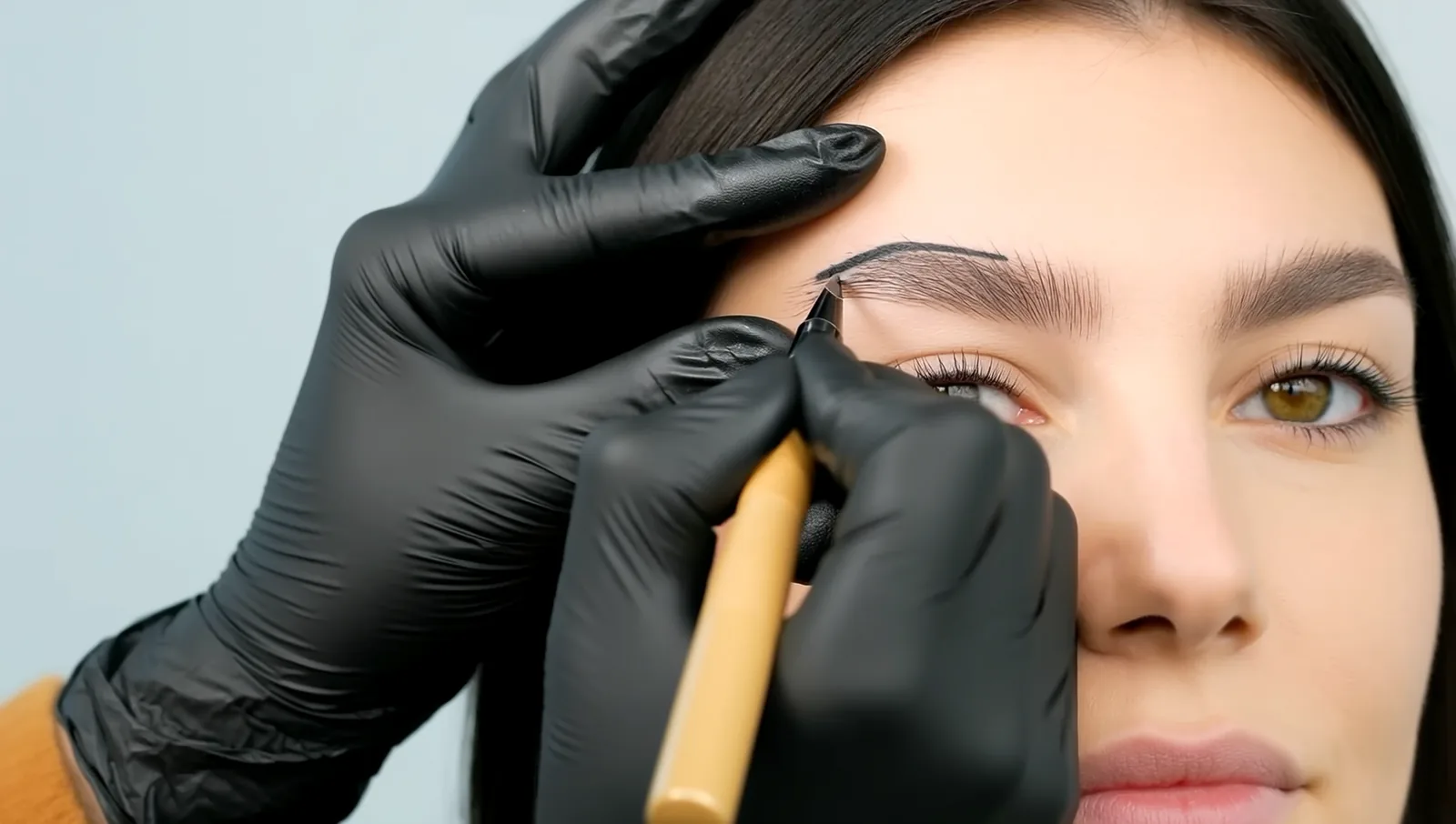
Microblading is a cosmetic tattoo, so it is a bigger undertaking. The session opens with a consultation that maps the ideal shape to your face, followed by topical numbing cream and ninety minutes to two hours of careful blade work. A perfecting touch-up four to eight weeks later fills any strokes that did not hold during healing.
Healed results last roughly one to three years before a color refresh is needed, and retention depends heavily on skin type. Oily skin in particular tends to blur and fade the strokes faster, which is why a frank conversation about your skin matters before you book. Our microblading by skin type pairing guide breaks down what to expect for oily, dry, mature, and sensitive skin.
Who Each One Suits
This is where the choice usually resolves itself. Lamination shines on brows that have plenty of hair but lack order: thick, coarse, or unruly brows that grow in several directions, stubbornly downward hairs, or brows with small gaps that can be hidden by brushing hairs up and over them. What it cannot do is create density that is not there. If large sections of your brow are bare, lamination has nothing to lift into place.
Microblading is built for the opposite situation: sparse, thin, over-plucked, patchy, or absent brows, including hair loss from genetics, alopecia, or chemotherapy. It draws brows where none exist, so it does not rely on your natural growth. The trade-off is permanence of a kind. It commits you to one shape and shade for a year or more, while lamination can be restyled completely at your next visit.
The Two-Year Cost Picture
On the surface, lamination looks like the budget choice. A session runs about $100 to $150, while microblading’s $400 to $800 starting price feels steep by comparison. The picture changes when you measure across time, because the two treatments run on completely different clocks.
Lamination needs redoing every six to eight weeks. That works out to roughly fifteen sessions across two years, or about $1,500 to $2,250 at typical pricing. Microblading front-loads its cost instead: an initial session of $400 to $800, a perfecting touch-up six weeks later (often included, sometimes $100 to $250), and a color refresh about once a year at roughly half the original price. Over the same two years, most people land somewhere around $700 to $1,400.
In other words, the treatment with the scarier sticker price is often the cheaper one over time, and the longer your horizon, the more that gap widens in microblading’s favor. Lamination only stays cheaper if you treat it as an occasional indulgence rather than a standing appointment.
Healing and Aftercare
The downtime gap is just as wide as the cost gap. After lamination, you keep the brows dry for 24 to 48 hours, skip makeup on the area for a day, and avoid steam rooms, saunas, swimming, and heavy sweating for about two days so the set has time to hold. A daily conditioning oil (castor oil or a dedicated brow serum) then keeps the chemically treated hairs from drying out. There is no peeling and no scabbing.
Microblading is a healing process, not just an appointment. The skin scabs and flakes over roughly ten to fourteen days, during which you keep the area dry and avoid sun, pools, and sweat while resisting the urge to pick. The color looks dark and sharp at first, then softens as it settles. Rushing or skipping aftercare is the fastest way to lose strokes. Our microblading aftercare guide walks through the healing stages day by day.
Safety, Patch Tests, and Choosing a Provider
Both treatments deserve a patch test before your first appointment. Lamination relies on active chemicals that can irritate the thin skin around the eye or trigger an allergic reaction, and while burns are rare, they become more likely if the solution is left on too long or if you use retinoids or acid exfoliants that thin the skin. Anyone with eczema, psoriasis, or rosacea near the brows should check with a dermatologist first, and repeating lamination sooner than six weeks can leave the hairs dry and frizzy.
Microblading carries higher stakes because it breaks the skin. It is a regulated procedure in most places, requiring licensing and bloodborne pathogen certification, and an unlicensed practitioner is a real safety risk rather than a bargain. A patch test for the pigment guards against allergic reaction. With either treatment, the result varies with the skill of the artist and the behavior of your own skin, so vet your provider’s credentials and look at photos of their healed work before you book. Many of the questions that come up here are answered in our microblading FAQ.
When It Makes Sense to Combine Them
Because they target hair and skin separately, the two are not really competitors, and plenty of people use both. The usual sequence is to laminate first and microblade second, so the pigment strokes are placed to work with hairs that are already lifted into their final position. Once the microblading has healed, you can keep laminating as often or as little as you like, or stop entirely, since the pigment stays regardless. Brow specialists tend to describe the pairing as complementary rather than an either-or decision, because lamination grooms the hair while microblading fills in the canvas underneath.
Making the Call
If you have healthy hair that simply will not behave, lamination is the lower-commitment, fully reversible way to tame it, provided you are happy to repeat it every couple of months. If your brows are sparse and you want a defined shape that survives sweat, swimming, and sleep without daily effort, microblading is the longer-lasting (and, over two years, often cheaper) answer, as long as your skin is a good candidate and you accept that semi-permanent means it fades rather than lasting forever. When you are unsure, book a consultation with a licensed brow professional who offers both, and let your hair density and your tolerance for upkeep make the decision for you.
Sources
- HELLO! Magazine on why lamination and microblading solve different brow problems
- Healthline for how brow lamination works, its risks, and what it costs
- Healthline with a realistic look at how long microblading lasts
- All About Vision covering the eye-area safety side of brow lamination
- Refinery29 warns about the hair damage that can follow repeat lamination