At-Home Microblading Kits and DIY Brow Tattoo Pens: Why the Cheap Shortcut Is a Health Risk
Published on July 17, 2026
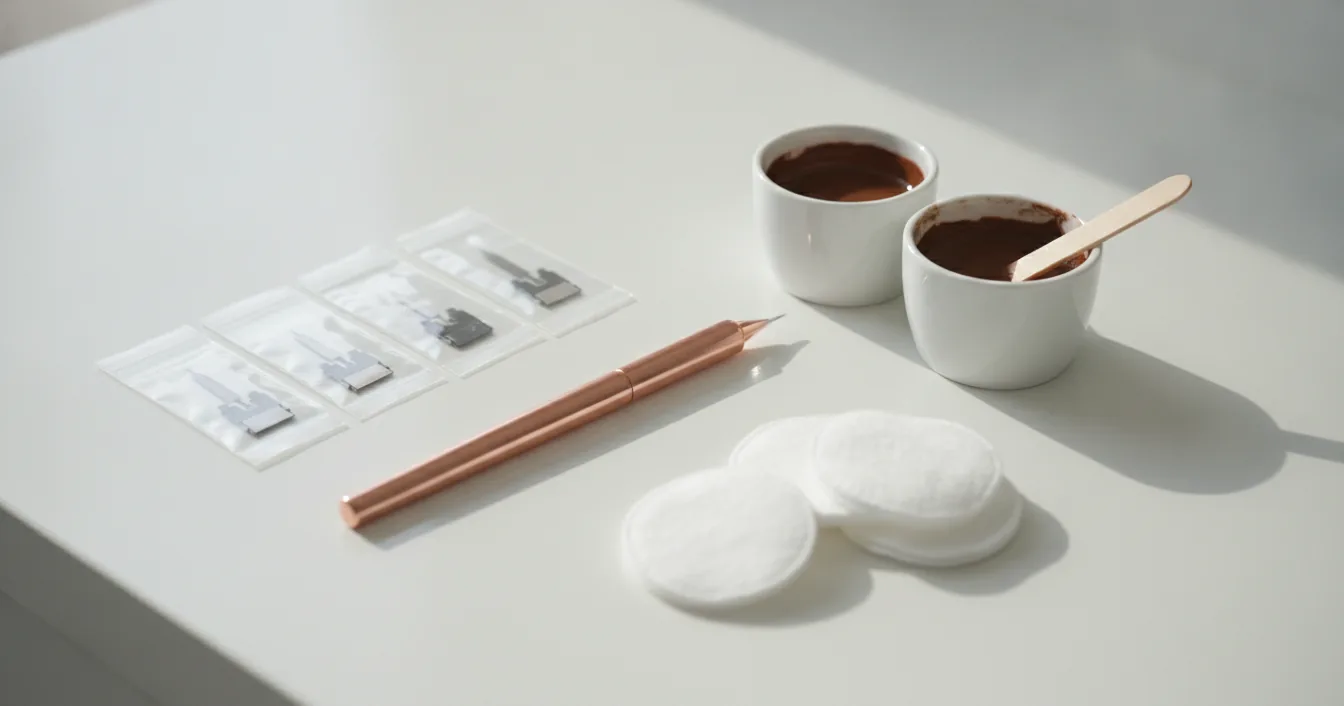
Search “microblading pen” on any large marketplace and you will find them by the hundreds. A slim metal handle described as a “3-in-1 permanent makeup tattoo tool,” sold in a pretty champagne finish, bundled with a row of fine blades and a few pots of pigment, often for less than the price of a dinner out. The listings promise salon brows at home for a fraction of the studio cost. What they gloss over is the part that matters most: these are tattoo tools, and using one means cutting pigment into your own face. This article explains what these kits really are, why the do-it-yourself route carries far more risk than a licensed studio, the legal grey zone that lets the tools sell so freely, and what to do if you or someone you know has already tried one.
What Is Actually in the Box
Strip away the marketing and an at-home microblading kit is a manual tattoo device. The centerpiece is a handheld pen that holds a disposable blade, and that blade is not a single edge but a tight row of tiny needles arranged in a curve or a straight line. Around it you get small cups of pigment, a few practice sheets of latex “skin,” some numbing gel, and maybe a pigment ring and a measuring pencil. The “3-in-1” or “multifunction” language usually just means the handle accepts different blade and needle attachments, so one tool can do hair strokes, shading, and lip or eyeliner work.
None of that changes the basic fact. When you drag those needles through your skin, you are tattooing. The tool does exactly what a professional’s tool does, only now it is in the hands of someone with no training, no supervision, and no reliable way to judge how deep is too deep.
The Part the Listing Skips: You Are Cutting Into the Dermis
Microblading works by opening fine channels in the skin and depositing pigment into a very specific, very shallow layer, right where the epidermis meets the top of the dermis. Go shallower and the pigment sheds as the skin renews. Go deeper and you reach blood vessels, the pigment blurs and migrates, and you invite permanent scarring. Trained artists spend months learning to feel that narrow window by hand.
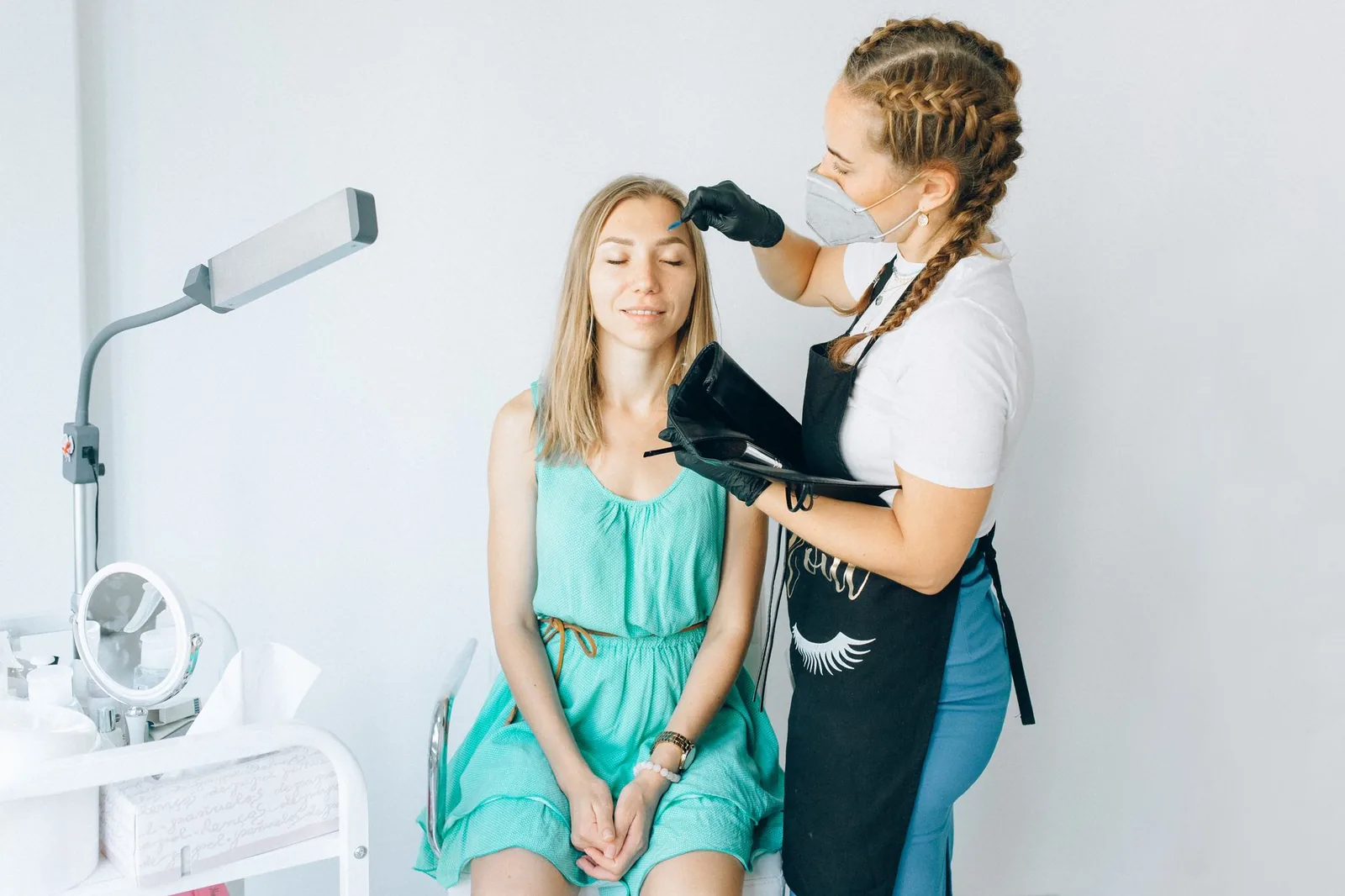
As the dermatologists at Westlake Dermatology put it, amateurs “do not have an understanding of the fine balance of controlled skin damage.” A professional knows how much pressure produces a crisp stroke without tearing the tissue. A first-timer working on their own face, flinching at the discomfort and holding a mirror in one hand, has no reference point at all. The predictable result is cuts that run too deep in some spots and too shallow in others, which is exactly how you end up with both scarring and patchy, uneven strokes in the same set of brows.
Infection and the Myth of the “Clean” Kitchen
Any time the skin barrier is broken, bacteria have a way in. This is the single biggest reason microblading belongs in a regulated setting. A licensed studio is inspected by the health department and uses single-use sterile blades, sealed pigment, fresh gloves, and a practitioner who holds a current bloodborne pathogen certification. A bathroom counter, however carefully you wipe it down, is not sterile. Wiping a surface is not the same as sterilizing a tool, and a home simply cannot meet that standard.
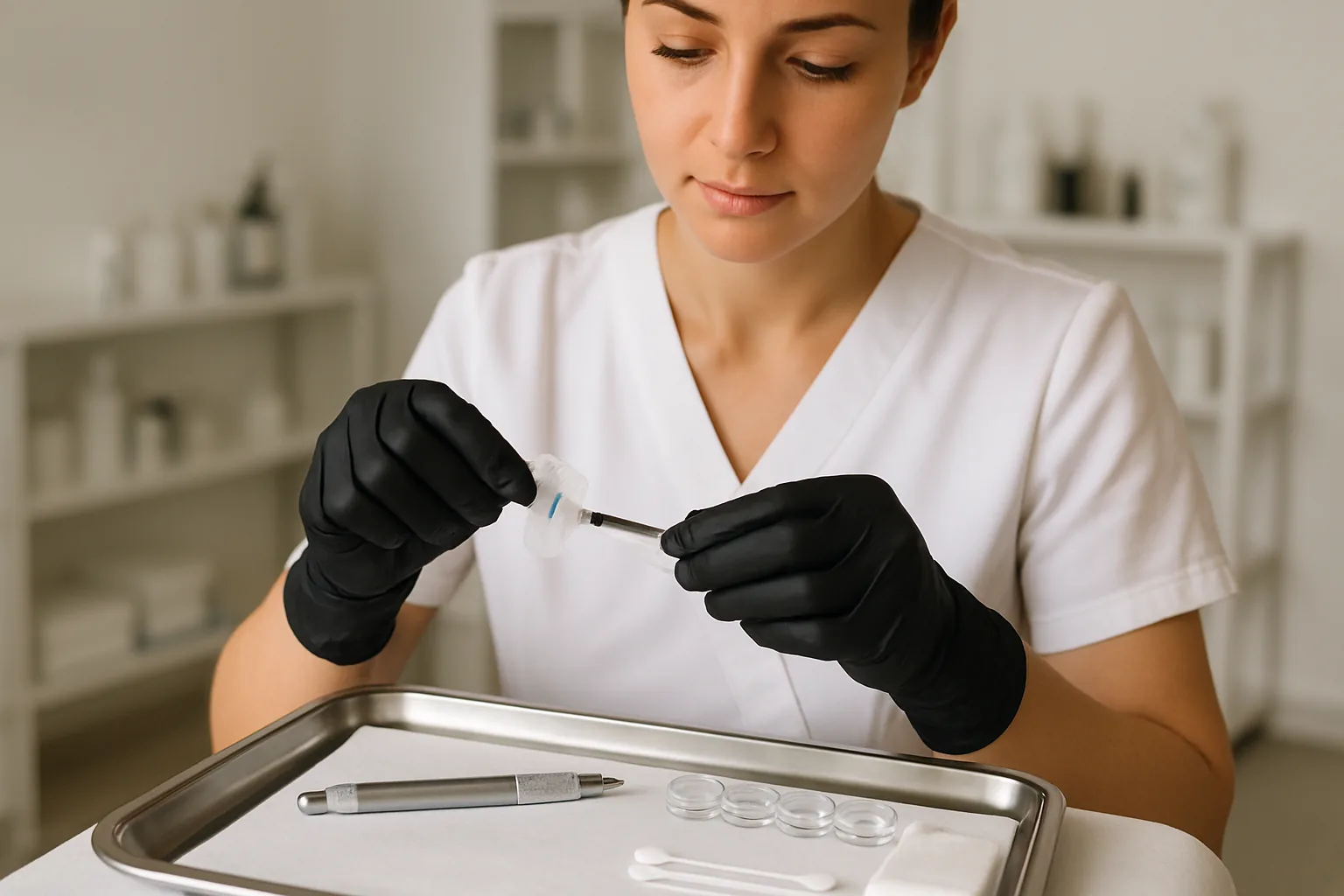
The infection risk here is not theoretical. Open skin on the face, close to the eyes, seeded with bacteria from an unsterile blade or an unwashed hand, can lead to painful local infections that scar, and in worse cases to something that needs a doctor and antibiotics. Reused or badly handled blades add the further hazard of bloodborne pathogens passing between anyone who shares the kit. Professional certification exists precisely to manage that danger, and it is the exact safeguard the DIY route throws away.
No Patch Test, and Nobody Knows What Is in the Pigment
Before any pigment touches a client, a reputable artist runs a patch test, because pigment allergies are real and occasionally serious. A do-it-yourself kit skips that step completely. Worse, the pigments bundled with cheap kits are often unbranded and of unknown composition, and pigment additives are loosely regulated to begin with. You are implanting a permanent, unidentified substance into your skin with no idea how your body will answer.
Reactions can be immediate, or they can surface weeks, months, or even years later as itching, swelling, or raised lumps. We cover those delayed reactions in our guide to bumps, lumps, and granulomas after microblading, and the way poorly made pigments discolour over time in our deep dive on microblading pigment chemistry. A bad pigment does not simply fade oddly, it can turn a strange colour and refuse to leave.
A Botched Job Is Semi-Permanent, and Hard to Undo
The cruel math of DIY microblading is that the mistakes last. This is a cosmetic tattoo, not a brow pencil you can wash off. Uneven strokes, a pigment that healed grey or pink, a scar where the blade went too deep: all of it sits in your skin, on the most visible part of your face, for a long time. Even carefully placed professional microblading shifts as it ages, as we detail in our look at what brows really do at 3, 5, and 7 years. A home job done with no plan and no skill ages far less kindly.

Fixing it is neither quick nor cheap. Correction and removal usually mean laser or saline sessions spread over many months, sometimes leaving scarring of their own, as we lay out in our guide to removing bad microblading. The forty-dollar kit has a way of turning into a multi-thousand-dollar removal.
The Legal Grey Zone
If microblading is a tattoo, how is it legal to sell the tools to anyone with a credit card? The honest answer is that the law tends to regulate the act, not the object. Most states classify microblading as tattooing. Florida, for one, treats microblading and permanent cosmetics as “a form of tattooing” and requires the person doing it to hold a tattoo artist license and to work in a licensed establishment, with bloodborne pathogen training and proper biomedical waste handling layered on top. Performing it on a paying client without that licensing is illegal in most places.
Selling a pen online slips through the gap. The marketplace ships a “beauty tool,” and enforcement falls on practitioners rather than shoppers. So the kits flow freely even though using one on a client would break the law, and using one on yourself quietly sidesteps every rule built to keep you safe. Licensing details vary from state to state, but the presence of the law is itself the tell: this is a regulated, medical-grade procedure, not a weekend craft project.
How to Recognize the Marketing
The listings follow a pattern once you know it. Watch for “3-in-1” or “multifunction” pens, “permanent makeup starter kit,” “manual microblading tool,” bundled “practice skins,” and a rock-bottom price sitting next to soft, aspirational photos of flawless brows. Pretty finishes and names like “champagne” are there to make a tattoo device read as a cosmetic. Any language that frames a skin-breaking procedure as an easy at-home beauty hack is the warning sign. If a product invites you to tattoo your own face, the low price is not a bargain, it is the risk in disguise.
If You Have Already Used One
If you have already gone through with it, do not panic, but do watch closely. For the first two weeks, keep the area clean, keep your hands off, and watch for signs of infection: spreading redness, swelling, warmth, pus, red streaks, or any fever. Any of those means you should see a doctor promptly, and tell them you tattooed the brow so it is not mistaken for ordinary acne or a rash. For a result you simply dislike, resist the urge to go back over it with the kit. See a licensed professional who can assess the skin and walk you through correction or removal options. If you have a skin condition such as eczema or rosacea, or you notice a delayed reaction, bring a dermatologist into the conversation.
The appeal of these kits is obvious, and wanting good brows at a fair price is completely reasonable. But the version of “affordable” that involves tattooing your own face is the most expensive one on the menu. Results already vary enormously with an artist’s skill and your skin type, and removing that skill from the equation only widens the odds against you. If you want the full picture of what can go wrong even in trained hands, our complete guide to microblading risks and contraindications is the place to start. Spend the money on a licensed artist, or choose a non-permanent option instead. Your own face is not the place to learn a tattoo skill on the cheap.
Sources
- Westlake Dermatology on why a home is never sterile enough to open the skin
- Florida Department of Health for how the state regulates microblading as a form of tattooing
- Medical News Today with a plain-language rundown of microblading’s costs and risks
- PMUHub covering why the DIY microblading route so often goes wrong
- AMA Academy on how microblading licensing differs from state to state