Microblading After 50: What Mature Skin Clients Need to Know
Published on June 3, 2026
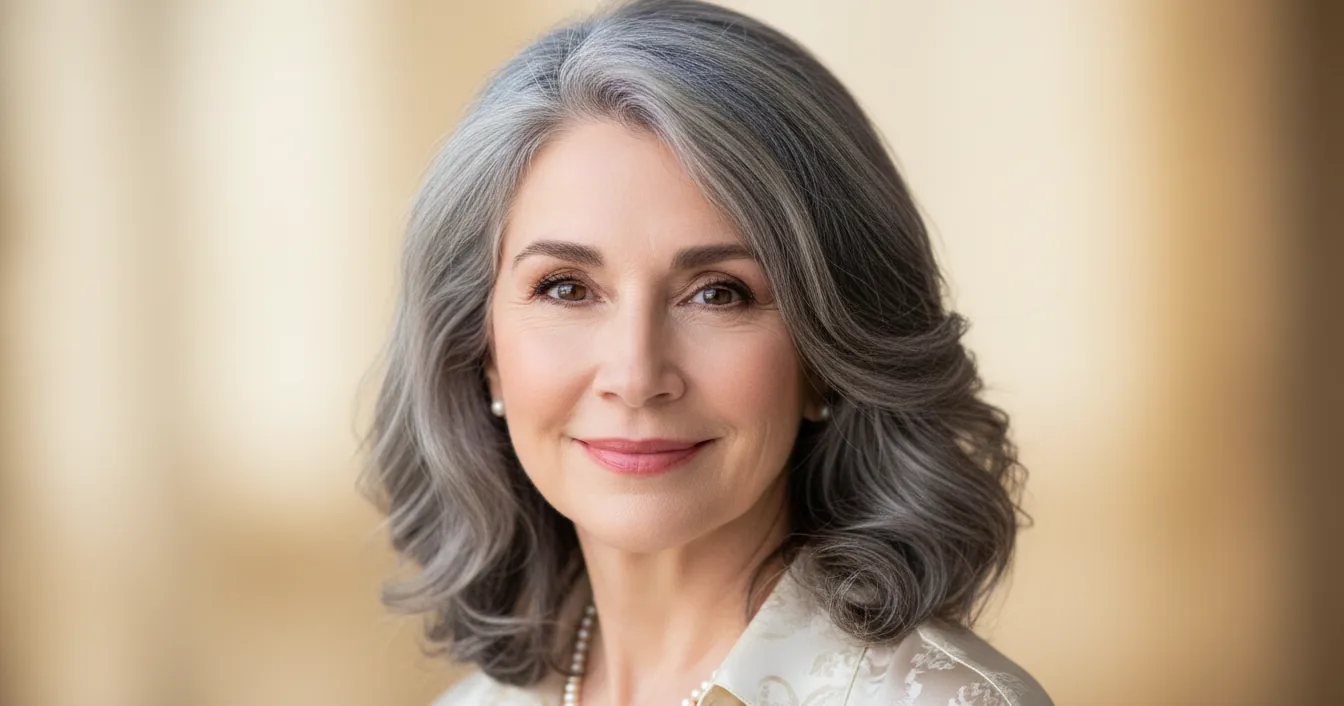
More women are booking their first brow tattoo in their fifties, sixties, and seventies than at any point before, and the reason shows up in the mirror every morning. Brow hair thins with age, the pencil that used to take ten seconds now wanders across skin that has lost its grip, and a lifetime of plucking has left gaps that never filled back in. Microblading offers to hand back the full, defined brows of a few decades ago, and it often can. But mature skin behaves differently under the blade than the skin of a twenty-five-year-old, and a smart approach after 50 starts with understanding exactly what changes and what does not.
Why So Many Women Start After 50
Permanent makeup studios are reporting a clear rise in older clients, and the drivers are mostly biological. Estrogen drops through and after menopause, and since hormones help regulate hair growth, brows tend to thin, lighten, and sometimes vanish at the tail. Many women in this age group also came of age in the era of the pencil-thin brow, and decades of over-tweezing damaged the follicles for good. On top of that, grey and silver hairs simply read as invisible against the skin, so a brow that is technically still there can look like it is gone.
Then there is the daily struggle that has nothing to do with appearance. Filling brows by hand takes a steady grip and sharp near vision, and arthritis, tremor, or changing eyesight can turn a thirty-second routine into a frustrating one. For a lot of clients, waking up with shape and color already in place is less about vanity and more about reclaiming an easy morning.
How Mature Skin Changes the Result
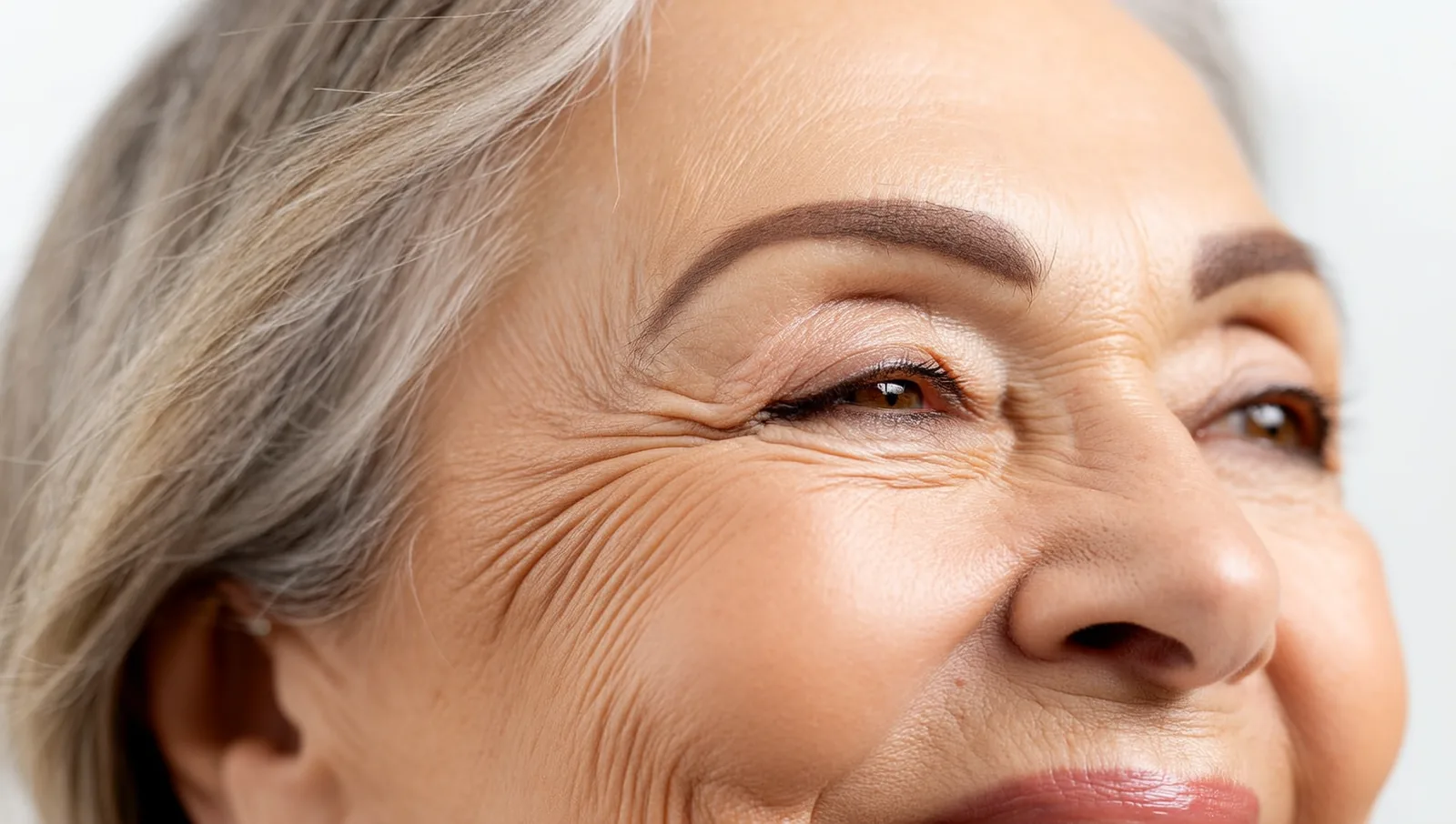
Skin loses collagen and elastin steadily after midlife, which leaves it thinner, less elastic, and usually drier. All three traits affect how a brow tattoo heals. Looser skin can shift slightly under the blade, so the same pressure that lays a clean line on taut skin may deposit pigment unevenly, leaving small gaps to correct later. Slower cell turnover and reduced blood flow mean healing takes longer, and crisp hair strokes tend to soften and blur faster than they would on younger skin. Color can also fade sooner on dry, mature skin.
None of this disqualifies you. Plenty of artists report excellent, natural results on healthy skin well into the sixties and beyond. What it does mean is that the conversation matters more than it would for a younger client, and that pigment behavior is simply less predictable. For the full picture of how different skin types respond, our microblading by skin type pairing guide breaks down retention on mature, dry, oily, and sensitive skin.
Crisp Strokes or Soft Powder?
Here is the single most useful thing to know before you book. The fine, hair-like strokes that make microblading famous depend on skin holding a clean line, and lax or thin mature skin does not always cooperate. When strokes blur together, the brow can end up looking less natural than intended. For this reason, many specialists steer mature clients toward powder brows (also called ombre brows) or a combination approach instead of classic microblading alone.
Powder brows deposit pigment as soft, pixelated shading with a machine rather than a blade, so the finished look reads like a tinted brow product that has been applied with a light hand. Because there is no fine line to lose, the result tends to hold its shape and fade more gracefully on mature skin. A combo brow places a few hair strokes through the sparse front of the brow and shifts to soft shading through the arch and tail, blending realism with retention. Nano brows, which use a single ultra-fine needle on a machine, are another gentler option for thin or delicate skin. A skilled artist will recommend the technique that suits your skin rather than selling you the one you walked in asking for.
If your brows still have plenty of hair and you mainly want them shaped and lifted rather than rebuilt, you may not need pigment at all. Our comparison of brow lamination and microblading covers when a non-tattoo option is the better fit.
Medications and Health to Disclose
This is where microblading after 50 differs most from microblading at 30, because more of us are on daily medication by this age. Blood thinners are the headline concern. Prescription anticoagulants like warfarin and clopidogrel, along with everyday items such as aspirin, ibuprofen, fish oil, vitamin E, and ginkgo, all increase bleeding during the procedure. Extra bleeding dilutes the pigment as it is implanted and pushes it back out of the skin, which directly worsens retention and can leave patchy, faded results.
The rule to remember is simple: disclose everything, and never stop a prescribed medication on your own. Some doctors will approve a short pause on a low-dose blood thinner before a cosmetic procedure, and some will not, because the clot risk outweighs a beauty appointment. That decision belongs to your prescribing physician, not your brow artist. If pausing is not safe, a gentler technique or a frankly managed expectation about retention is the right path. Bring a full list of medications and supplements to your consultation, and flag conditions that slow healing, such as diabetes or an autoimmune disorder. Retinoids and strong exfoliating acids thin the skin and should be paused well ahead of time too.
Choosing Color for Grey or Silver Hair
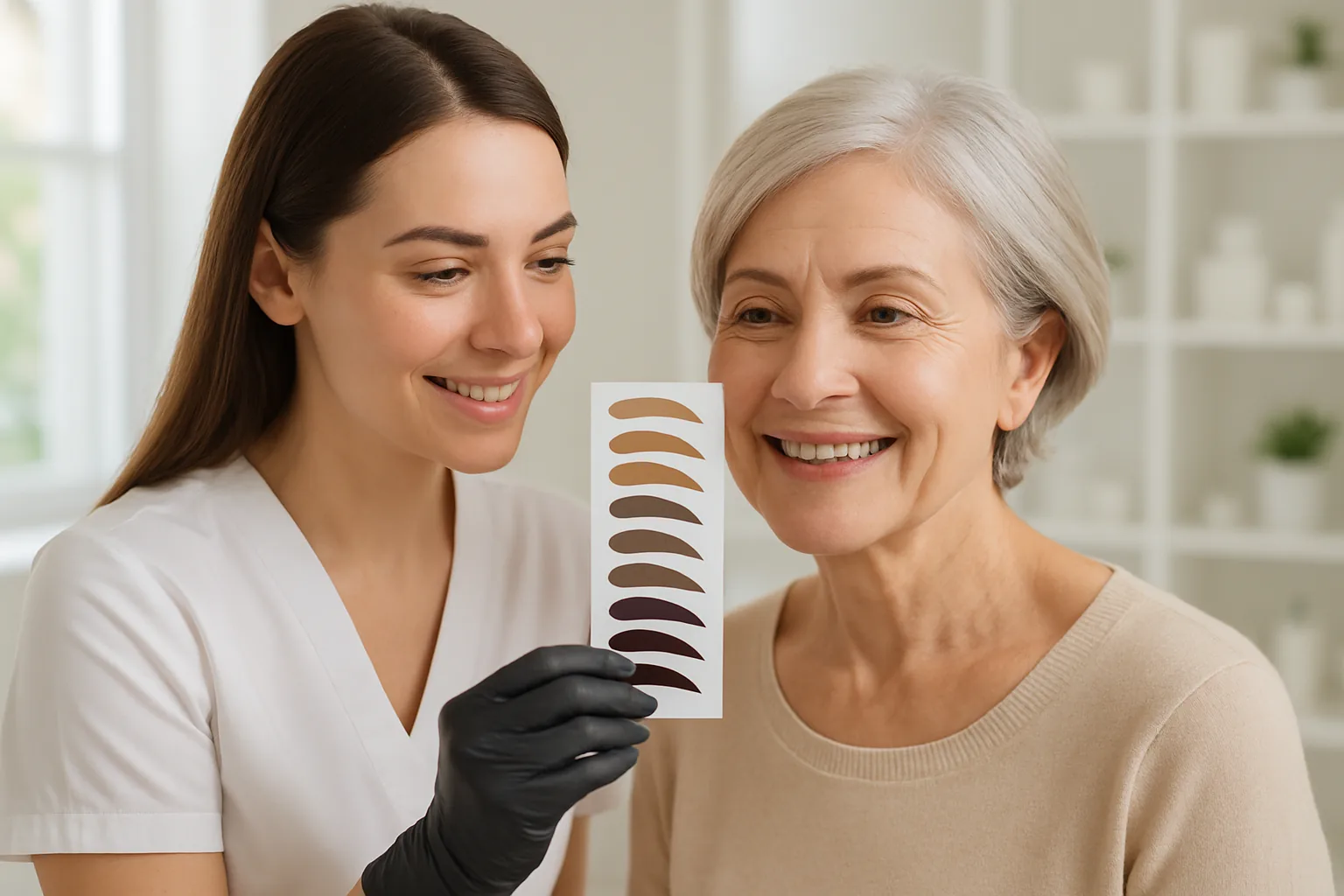
Once hair turns grey or silver, the old habit of matching brow color to hair color stops working. A cool, ashy pigment chosen to mirror silver strands can settle flat and lifeless against the skin. The better strategy is to select a shade based on your skin’s undertone, usually a soft taupe or a muted ash brown that adds gentle definition without harshness. Avoid true black and overly cool browns, which tend to oxidize toward grey or blue over time. A good artist mixes pigment for your face, not your hair, and the skin type guide goes deeper on undertone matching for mature complexions.
Touch-Ups and Keeping It Looking Right
Every microblading client returns for a perfecting session about six weeks after the first appointment, and on mature skin that visit carries extra weight, because uneven healing and small gaps are more common and this is when they get corrected. After that, plan on a color refresh roughly once a year, though dry or thin skin may need one a little sooner as pigment fades. Diligent aftercare protects the investment in those first two weeks, and our microblading aftercare guide walks through the healing stages day by day. Healed results generally last one to three years depending on skin and lifestyle, with sun exposure being the fastest way to fade them.
Getting It Right the First Time
Two safeguards matter for every client and even more for mature skin. First, insist on a patch test before any pigment goes near your brows, since reactivity and allergies can surface at any age and thinner skin is quick to flush. Second, confirm your artist is licensed and holds current bloodborne pathogen certification. Microblading is a regulated procedure that breaks the skin, and an unlicensed practitioner is a genuine safety risk, not a discount. Ask specifically to see photographs of healed work on clients your own age, since a portfolio full of taut thirty-year-old brows tells you little about how the artist handles mature skin. If you have eczema, rosacea, or particularly fragile skin, check with a dermatologist first. And keep expectations realistic: this is semi-permanent, it fades, and the result depends on both the artist’s skill and your own skin. Many of the common worries are answered in our microblading FAQ. Done thoughtfully, microblading after 50 can be one of the simplest ways to look refreshed without changing a thing about who you are.
Sources
- Allure on what to know before any permanent makeup procedure
- The Herald-Times reporting growing demand for permanent makeup among older adults
- BrowBeat Studio for why powder brows often hold better on mature skin
- Microblading San Antonio covering how blood thinners and common medications affect results
- Good Housekeeping with matching a brow shade to silver or grey hair
- Healthline on the factors that make microbladed brows fade faster