Microblading After Chemo: A Guide for Cancer Patients Who Lost Their Brows
Published on August 27, 2026

Everyone warns you about your hair. Nobody sits you down and explains that your eyebrows will go too, or that losing them will change your face in a way the scalp never did. Brows and lashes are what the eye reads as expression. When they thin out, people stop recognising you in photographs, and you start recognising the illness every time you pass a mirror.
The clinical name is madarosis, and it is strikingly under-researched. A 2024 review in the Journal of Drugs in Dermatology makes the point bluntly: while it is universally acknowledged that cancer treatment causes scalp hair loss, there is limited data on what it does to eyebrow and eyelash hairs, and the treatment options patients reach for, from makeup camouflage to permanent tattooing to prescription medication, have barely been studied in this population. The same review argues that dermatologists ought to be far more involved in supportive care for these patients than they currently are.
Microblading comes up early in that search for options, and it is a reasonable thing to want. This guide covers when it is actually safe, why the waiting period is longer than you would like, and what to look for in an artist.
Why Chemo Takes Your Brows Differently
Chemotherapy attacks rapidly dividing cells, which is why it hits hair follicles that are in their active growth phase. Scalp follicles are overwhelmingly in that phase at any given moment, which is why scalp hair goes suddenly and almost completely, usually within the first two to three weeks.
Brow follicles run a different cycle. Their growth phase is short, measured in weeks rather than years, and a much smaller share of them are actively growing at once. The practical result is that brows thin rather than shed, and they often do it later, after several cycles rather than after the first. Some people keep a patchy fringe of brow hair the whole way through. Others lose them completely by mid-treatment. Neither pattern tells you anything about how the treatment is working.
Chemotherapy is also not the only culprit. The same review names endocrine therapies and radiation as causes of brow and lash loss. Aromatase inhibitors and tamoxifen, taken for five to ten years after primary treatment, are a common source of ongoing thinning that patients often do not connect to the drug. Radiation causes loss only where the beam falls, so it matters for head and neck or brain fields, and at higher doses that loss can be permanent.
During Active Treatment, the Answer Is No
There is no gentle version of this. Any competent artist will decline to microblade you while you are receiving chemotherapy, and if one does not decline, that tells you something important about the artist.
The reason is your blood counts. Microblading is a tattoo, which means hundreds of open wounds in the most vascular part of your face, at a point when your neutrophil count may be too low to mount a normal response to bacteria. A systematic review of systemic infections linked to tattoos and permanent makeup documented bloodstream infections, staphylococcal toxic shock, and septic shock associated with cellulitis or necrotizing fasciitis within two weeks of a procedure, mostly from ordinary skin organisms like Staphylococcus aureus and streptococcus. Those are exactly the infections that turn dangerous in a neutropenic patient, and they are the reason your oncology team treats an unexplained fever as an emergency.
Low platelets compound it. Bleeding at the blade dilutes pigment and pushes it back out, so even setting the safety question aside, the work would not hold. Broader dermatology guidance is consistent here: reviews of tattoo complications advise that immunocompromised patients and people with chronic conditions discuss the procedure with their physician before going ahead, not after. Our risks and contraindications guide covers the wider list, but active chemotherapy sits firmly in the absolute category rather than the proceed-with-caution one.
Why the Wait Is Six to Twelve Months
Once treatment ends, most oncologists will ask you to wait somewhere between six and twelve months. That number frustrates people, so it is worth understanding that it is doing two separate jobs.
The first is medical. Blood counts, immune function, and skin healing take months to normalise after the last infusion, and the recovery curve is not the same for everybody. Six months is a floor, not a promise.
The second reason matters more to artists, and almost nobody explains it: your brows are probably coming back. Regrowth usually begins within a few weeks to a couple of months of the final cycle and continues for a year or more. What returns is often not what you had. It can be finer, patchier, a shade lighter or darker, sometimes with a different texture entirely. Microblading a bare brow at month three means designing permanent strokes around an absence, and then watching real hair arrive in a shape that does not match what was drawn. Pigment lasts years. The bare phase does not. Waiting until your natural brow has declared itself is the difference between work that ages well and work you spend money correcting.
For a minority of patients the brows genuinely do not return, particularly after taxane-based regimens associated with persistent alopecia, or after radiation to the brow field. That is a real outcome and microblading is a good answer to it. But it is an answer you can only identify by giving regrowth its full window.
Immunotherapy, Targeted Therapy, and Radiation Fields
These are separate conversations from chemotherapy, and they often get flattened into one.
Checkpoint inhibitors and other immunotherapies can run for a year or two, well past the point where you feel recovered. They work by deliberately unleashing the immune system, and skin reactions are among their most common side effects. Implanting a permanent foreign pigment into your face while your immune system is being pharmacologically provoked is a genuinely different risk profile, not just a healing question. The same logic that applies to biologics and immunosuppressants in our guide to microblading with an autoimmune condition applies here, in reverse. Ask your oncologist directly, and get the answer in writing.

Radiated skin is its own case. A treated field can stay fibrotic, fragile, and poorly vascularised for years, and it heals badly and unpredictably. If your brow sat inside a radiation field, the person to ask is your radiation oncologist, not your artist.
Endocrine therapy is usually the most permissive of the three. Tamoxifen and aromatase inhibitors are not immunosuppressive, and most artists will work with clients taking them, though the associated thinning and skin dryness are worth factoring into your expectations.
Finding an Artist Who Actually Works With This
The term to search for is medical or paramedical PMU. Artists who do areola and nipple restoration after mastectomy or scar and burn camouflage, already work inside the medical system. They are used to requesting clearance letters, they understand what a compromised immune system means, and they have designed brows for faces with no native hair to follow. Some hospitals and cancer support charities keep referral lists, which is a better starting point than a search engine.
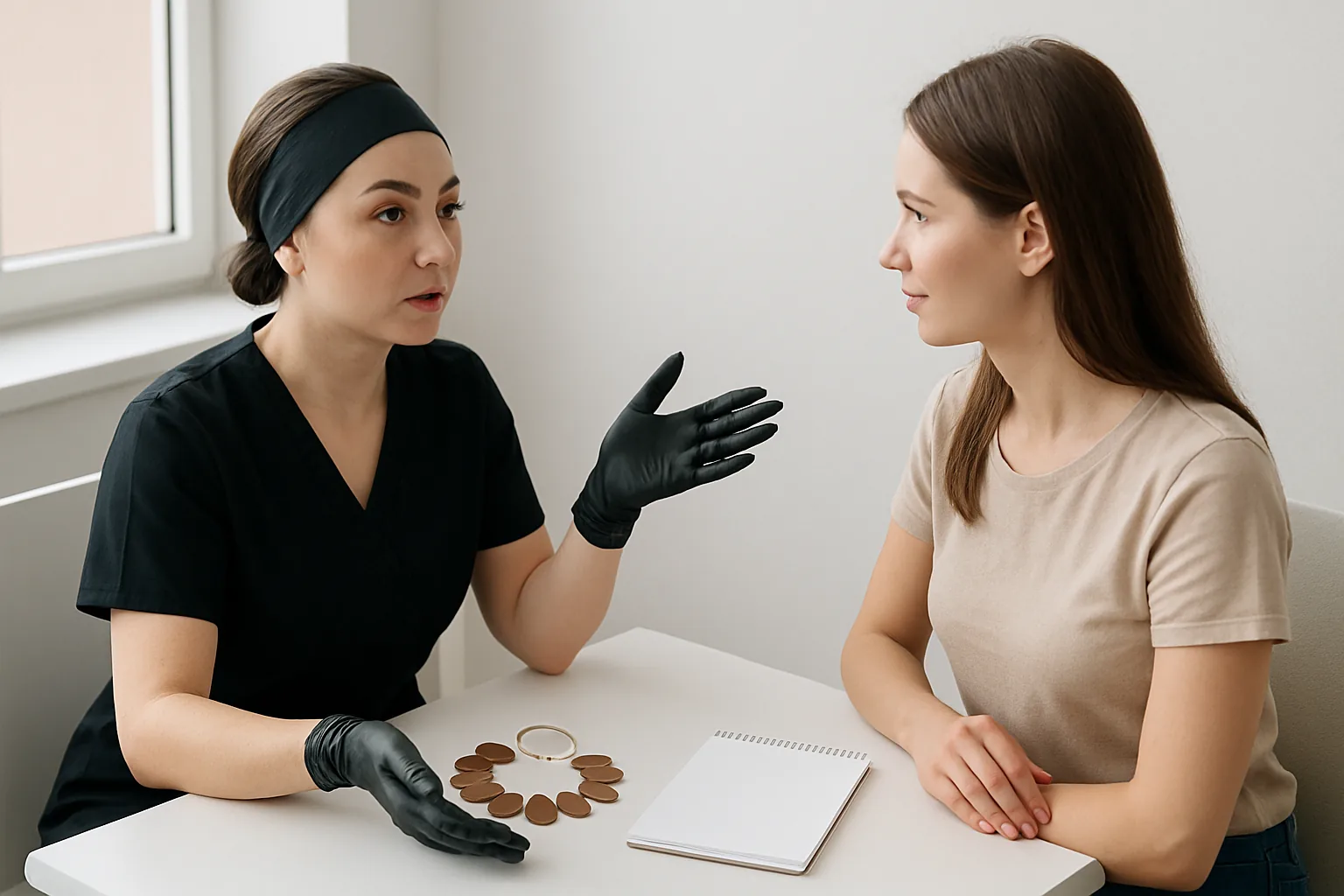
Screening questions worth asking outright: do you require a clearance letter from my oncologist, have you worked with post-treatment clients before, and can I see healed photographs (not fresh ones) of a brow you built where there was no remaining hair. An artist who answers “of course, no problem” without asking a single question about your treatment history has told you everything you need to know. Training and licensing standards vary enormously by state, as a 2024 review in the Journal of the American Academy of Dermatology notes, so the credential on the wall is not a substitute for the conversation.
Patch Testing Is Not Optional Here
It never is, but this is a population with more reason than most to insist. Ask for a pigment patch test well before your appointment, and ask for it to be read at two weeks rather than at forty-eight hours, because pigment reactions are frequently delayed. If a reaction does surface later, our guide to treating a microblading granuloma explains what the dermatology pathway looks like. Tell your artist and your oncology team about any reaction, however minor it seems.
Designing a Brow From Nothing
When there is no hair left, the artist has no reference for shape, so bring photographs of yourself from before treatment. Old passport pictures and casual snapshots are more useful than you expect.
Technique matters more on a bare brow than on a full one. Crisp individual microblading strokes are designed to blend into existing hair, and with nothing to blend into they can read as drawn on rather than natural. Many artists working with this population reach for powder, ombre, or combo brows instead, where a soft shaded base does most of the work and strokes are used sparingly. Machine-based methods described in our hairstroke brows guide are also gentler on the skin than a manual blade, which matters when healing capacity is still recovering. Skin that has been through treatment is often drier and more fragile than it was, and the skin type pairing guide is a useful cross-check on technique. If you are also navigating the changes that come with age, microblading after 50 covers the overlapping ground on mature skin.
Ask for conservative design. A slightly softer, slightly shorter brow accommodates regrowth. A bold, fully saturated one does not.
What to Do in the Meantime
Waiting a year is easier with something to use in the interim. Brow pencils and powders remain the fastest fix, and stencils help enormously when there is no shape to follow. Brow hairpieces, essentially small stick-on wigs for the brow, exist and are underrated. Tinting and henna stain the skin temporarily and can work well, though skin sensitivity during treatment means patch testing and clearance apply to those too.
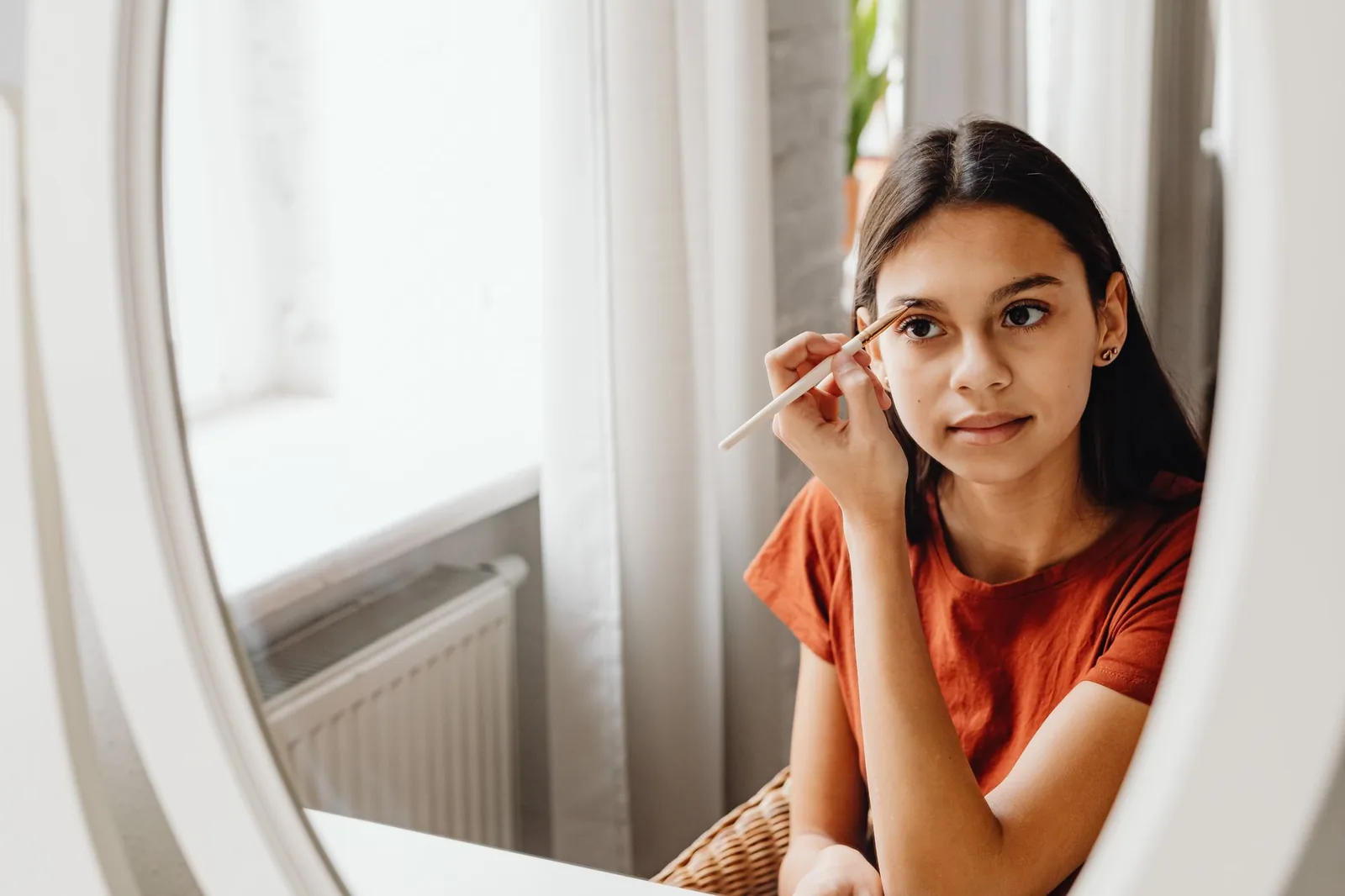
There is also a medical route to explore. The Journal of Drugs in Dermatology review notes that prescription options exist and that preventative approaches such as cryotherapy and topical vasoconstrictors look promising, while being candid that none of this has been properly studied in cancer-induced madarosis specifically. Supportive oncodermatology is a real subspecialty, and if your cancer centre has one, brow and lash loss is a legitimate reason to ask for a referral rather than something to absorb quietly.
Microblading is a good option for a lot of people in this position. It is simply an option with a queue in front of it, and most of that queue exists to make sure you are decorating the face you are going to keep, rather than the one treatment temporarily handed you.
Sources
- Journal of Drugs in Dermatology on eyebrow and eyelash loss in patients with cancer
- Medicina Clínica for the systemic infections traced to tattoos and permanent makeup
- Expert Review of Clinical Immunology with the advice that immunocompromised patients consult a physician first
- Journal of the American Academy of Dermatology covering how widely permanent makeup regulation and training vary
- Presse Médicale on how a physician should advise a patient who wants a tattoo
- Breastcancer.org for practical ways to manage brow and lash loss after chemo