Microblading Pigment Chemistry: Why Brows Turn Blue, Red, or Grey and How Modern Pigments Stay True
Published on June 18, 2026
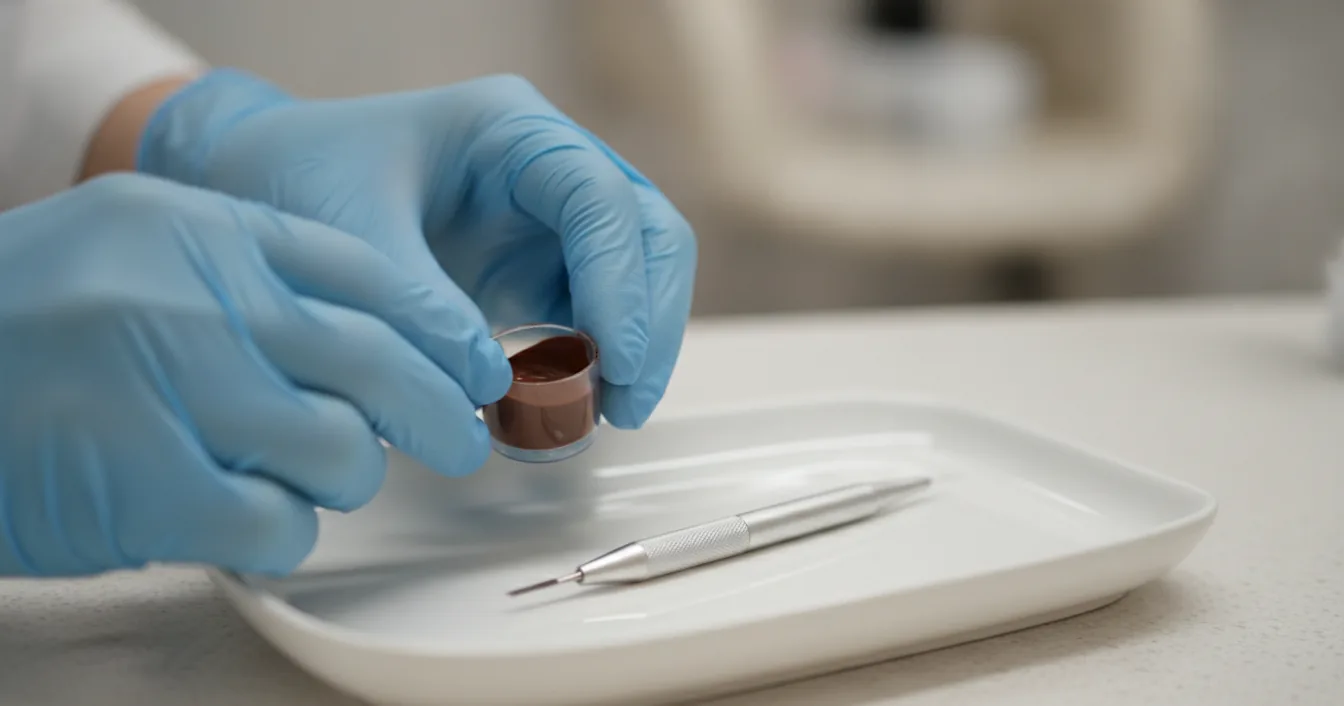
Almost every microblading regret story has the same shape. The brows looked perfect when they healed, a soft natural brown, and then somewhere around year two or three the color quietly changed. One Cosmopolitan writer watched her dark brown brows drift to “a grey-ish, blue-black hue” six years on. An Allure beauty editor found her pigment lingering as a “red-tinged” patch more than three years after her final touch-up. A New York Post feature catalogued brows aging into “gray, blue, green, orange, yellow or even pink.” None of these are accidents or bad luck. They are chemistry, playing out slowly under the skin. Understanding why pigment shifts color is the difference between a fade you can predict and a surprise you have to laser off.
The Two Pigment Families That Decide Everything
Permanent makeup pigments fall into two broad chemical families, and the balance between them governs how a brow ages.
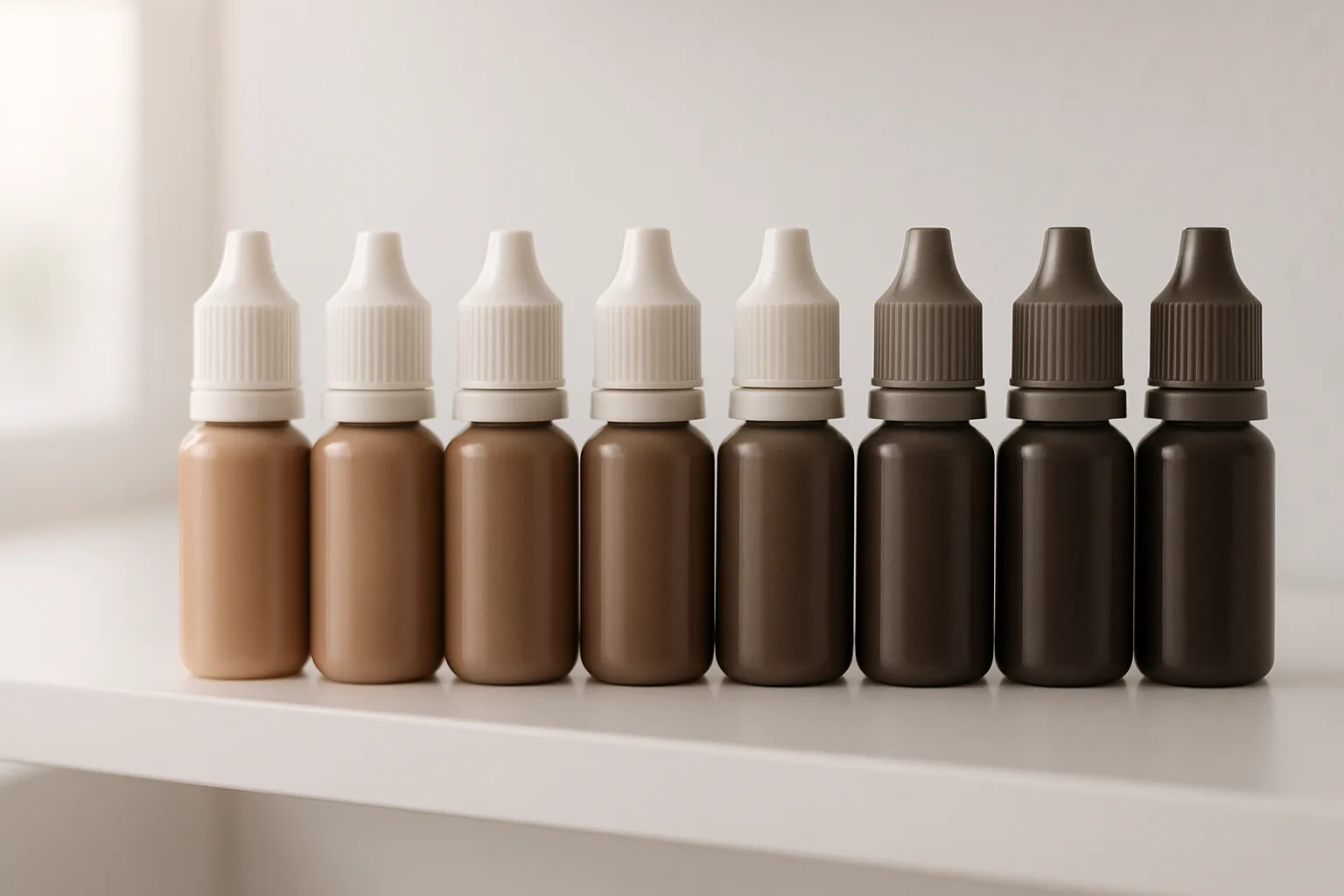
The first is inorganic iron oxides. These are mineral pigments, the same iron-based compounds that give clay and rust their color: black, red, and yellow oxides blended to build a natural brow brown. Iron oxides are stable, well tolerated, and have been the backbone of cosmetic tattooing for decades. Their weakness is that the blend rarely fades as a single unit.
The second is synthetic organic pigments, carbon-based molecules engineered for vividness and a far wider color range. They hold their saturation longer and read brighter, but historically they were also the pigments most likely to provoke an allergic reaction, with reds and oranges the usual offenders. Most quality brow pigments today are hybrids, an iron oxide base carrying organic modifiers, precisely because neither family alone gives you both stability and a true-to-life color.
Knowing which family is doing the heavy lifting in your shade tells you a great deal about how it will behave at year three.
Why Brows Turn Blue or Grey
A brown brow pigment is never just brown. It is a recipe: a dark base warmed up with red, orange, and yellow to land on a natural shade. The trouble is that those ingredients do not all survive at the same rate. As the warm modifiers fade first, the cooler, more stable base is left exposed, and the brow drifts grey, slate, or blue-black.
Depth makes it worse. When pigment is implanted too deep in the dermis, the overlying skin scatters light the way the atmosphere scatters it to make the sky blue, a phenomenon called the Tyndall effect. The same dark pigment that reads warm near the surface reads distinctly blue when it sits too far down. This is why heavy-handed older work so often turned blue-grey, and why oily skin, which lifts and disperses pigment unpredictably, is especially prone to cool drift. Our skin type pairing guide covers why oily skin fades faster and cooler than dry skin in more detail.
Why Brows Turn Red, Orange, or Pink
The opposite shift comes from the opposite imbalance. When a pigment leans heavily on warm iron oxides, or when the cool components break down faster than the warm ones, the surviving residue skews red, orange, or pink. The brow that healed a balanced taupe ends up looking rusty or salmon, sitting warm against the surrounding skin.
Skin undertone amplifies this. A pigment chosen without accounting for a client’s warm undertone, or one formulated with too much orange base to begin with, has nowhere to hide once it fades. Warm drift is the most common complaint on faded iron-oxide work, and it is one of the trickiest to correct, because layering a corrective cool tone over warm residue is far harder than starting fresh.
How UV and Skin Biology Move the Color
Pigment does not sit inertly in the skin waiting to be removed. It is under constant attack. Ultraviolet light photodegrades pigment molecules, breaking them apart and accelerating both fading and color shift, which is why unprotected sun exposure is the single biggest driver of premature change. Meanwhile the body’s own immune cells slowly engulf and carry off pigment particles, the skin renews its surface layers, and in oilier skin types sebum keeps nudging pigment out of place.
All of this means even a perfectly chosen pigment is a moving target. The most effective thing a client can do to hold color true is daily sun protection over the brow area, a point covered alongside the full healing routine in our microblading aftercare guide. Retinoids and exfoliating acids speed turnover and fade pigment faster too, so a brow that meets a new skincare habit can shift sooner than expected.
Why 2010s Brows Famously Went Wrong
The blue and red horror stories cluster around one era for good reason. The microblading boom of 2016 and 2017 chased the bold, sharply carved “Instagram brow,” and artists packed in dense rows of strokes to deliver that solid, high-contrast look. As one veteran brow specialist told Cosmopolitan, the more strokes you crowd together, the more they bleed out and merge into a blocky wash. Combine that dense packing with pigment placed too deep and with the cruder pigment formulations of the day, and you get exactly the outcomes that went viral: strokes blurring into solid shapes, color setting “in stone,” and brows that turned grey, blue, or red instead of fading away cleanly.
The “semi-permanent” promise compounded the disappointment. Pigments sold as lasting two years routinely lingered five, six, even eight, long enough for tastes to change and the chemistry to drift, but not long enough to disappear on their own.
What Modern Pigments Do Differently
The industry has spent the years since reckoning with all of this. As one cosmetic tattoo studio founder put it to Marie Claire, the field has moved “toward machine-based methods like nano brows, better pigments, and a deeper understanding of skin longevity.” Reformulated hybrid pigments are now engineered to fade lighter rather than fade off-color, so a brow loses saturation over time without lurching blue or red. Regulation pushed this along: when European authorities tightened the rules in 2022 on what could go into tattoo and permanent makeup inks, manufacturers across a market that Europe still dominates were forced to reformulate, and major pigment houses such as Perma Blend, Tina Davies, and Quantum have built newer, more stable lines around the change.
Technique evolved in step with chemistry. Shallower, more precise machine implantation places pigment at a depth less prone to the Tyndall blues, and better color-theory training helps artists choose a shade that accounts for undertone and predicted fade rather than just matching the brow on day one. The machine-based hairstroke methods now positioned as microblading’s successor lean on exactly these gains, as our hairstroke brows guide explains.
How to Vet an Artist’s Pigment Line
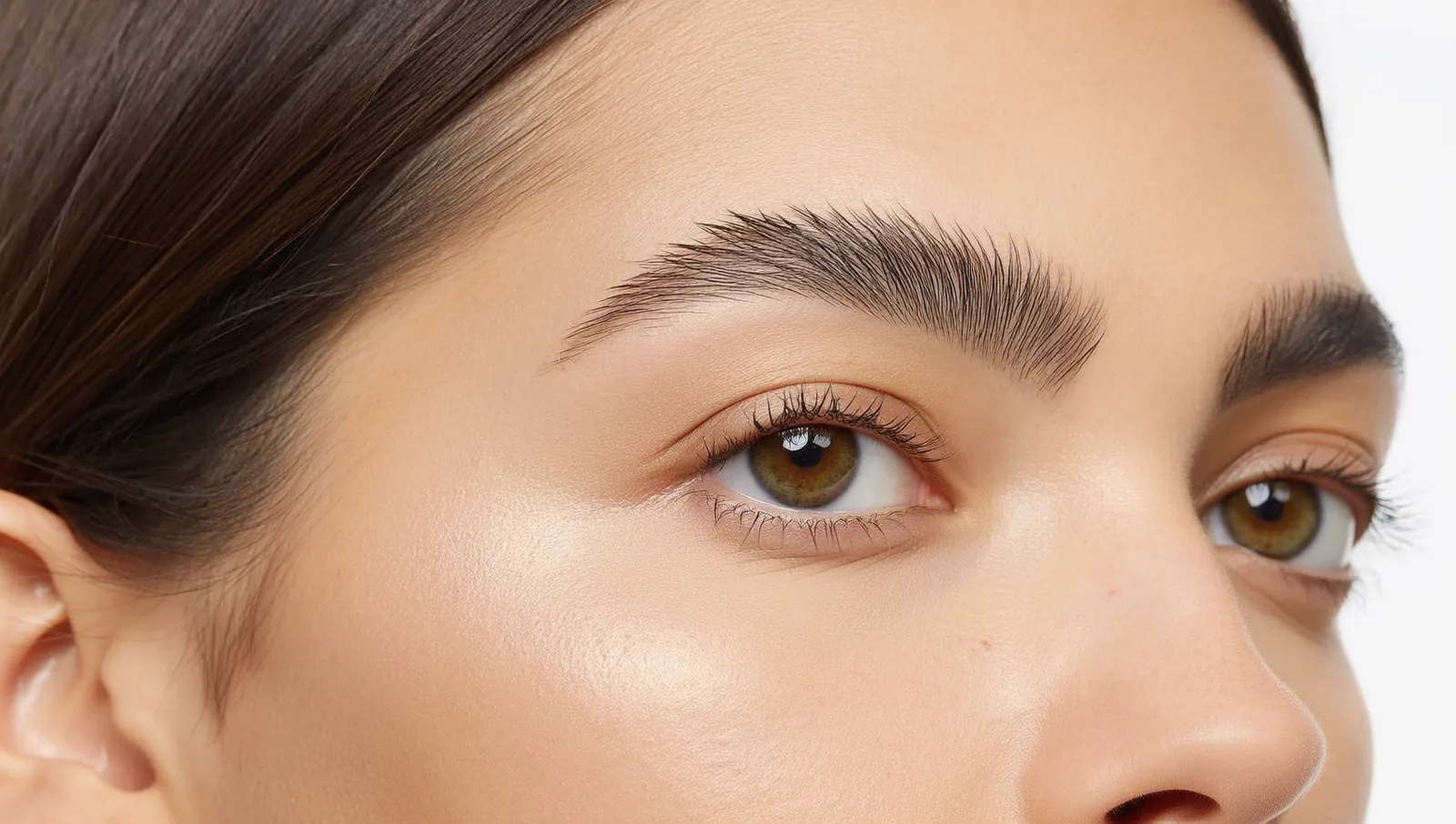
You do not need a chemistry degree to ask the right questions at a consultation, and a good artist will welcome them. Ask which pigment brand and line they use, and whether it is iron-oxide based, organic, or hybrid. Ask, plainly, how their pigments are designed to fade: the answer you want is “lighter and softer,” not a shrug. Ask to see healed photos of their own clients at one and two years out, not fresh work photographed the same day, because healed color is the only honest preview. An artist who tracks how their pigments age and can show you the results is one who has absorbed the lessons of the last decade.
Patch Testing and Realistic Expectations
Because organic pigments, especially reds, are the ones most associated with allergic and delayed reactions, a patch test before any pigment touches your brows stays non-negotiable. It is imperfect, since some reactions surface long after a clean test, but it remains the baseline safeguard, and reactions to pigment can show up as the bumps and lumps detailed in our guide to delayed pigment reactions after microblading. Anyone with eczema, rosacea, or other reactive skin should see a dermatologist before booking.
It is also worth keeping expectations honest. Microblading is regulated cosmetic tattooing, the result varies enormously with the artist’s skill and your own skin, and even the best modern pigment is still semi-permanent, not permanent. Reformulated inks fade more gracefully than their predecessors, but they still fade, and they can still shift a little along the way. The goal of understanding pigment chemistry is not to find a formula that never changes. It is to choose an artist and a pigment whose changes you can live with.
Sources
- Cosmopolitan on the grey-blue fade one writer lived with six years on
- Allure for why red-tinged pigment outlasts its semi-permanent promise
- New York Post with how once-trendy brows turned colors and set in stone
- Marie Claire on how far brow tattooing has come since 2016
- Allure covering the evolution of permanent makeup and what to know first
- Fortune Business Insights for the pigment market and the manufacturers reformulating it