How to Remove Bad Microblading: Laser, Saline, and Color Correction Options
Published on June 30, 2026

The brows that looked so good in 2018 are the reason a lot of people are sitting in a removal chair in 2026. Microblading sold itself as semi-permanent, a two-year commitment that would fade away politely. Instead, a wave of clients watched their strokes blur, darken, or drift into colors no eyebrow should be. Refinery29 followed one Los Angeles writer who had her sparse brows microbladed in 2018, only to watch the pigment settle into a “pink-ish red” three years on and go looking for a way to undo it. She is far from alone. Brow specialists now report seeing greens, oranges, and blues lurking in healed work, the slow chemistry of old pigment finally catching up with it. (Our pigment chemistry guide explains why aged brows drift to exactly those colors.)
The reassuring part is that bad microblading can be removed or substantially faded. The honest part is that doing so takes longer, costs more, and demands more patience than the original procedure did. There are three main routes: laser, saline lightening, and color correction with a skilled artist. Each suits a different kind of problem, and choosing the wrong one wastes months.
Before You Remove Anything, Name the Problem
Removal is the slowest and most expensive answer, so it is worth being sure you actually need it. Start by naming what genuinely bothers you.
If the only issue is color, a brow that has gone warm, ashy, or faintly blue but still sits in a flattering shape, you may not need removal at all. A corrective artist can often neutralize the tone or refresh it. If the issue is shape, density, or placement, brows tattooed too thick, too dark, set too low, or strokes that have migrated and blurred into a solid smudge, no touch-up will fix that. Adding more pigment to a shape you already dislike only deepens the regret. That is when removal earns its place.
A simple gut check: would you be happy if this exact shape were just lighter or a better color? If yes, lean toward correction. If you want the canvas genuinely cleared so you can start over, or stop altogether, you want laser or saline.
Laser Removal, and the Darkening Risk No One Warns You About
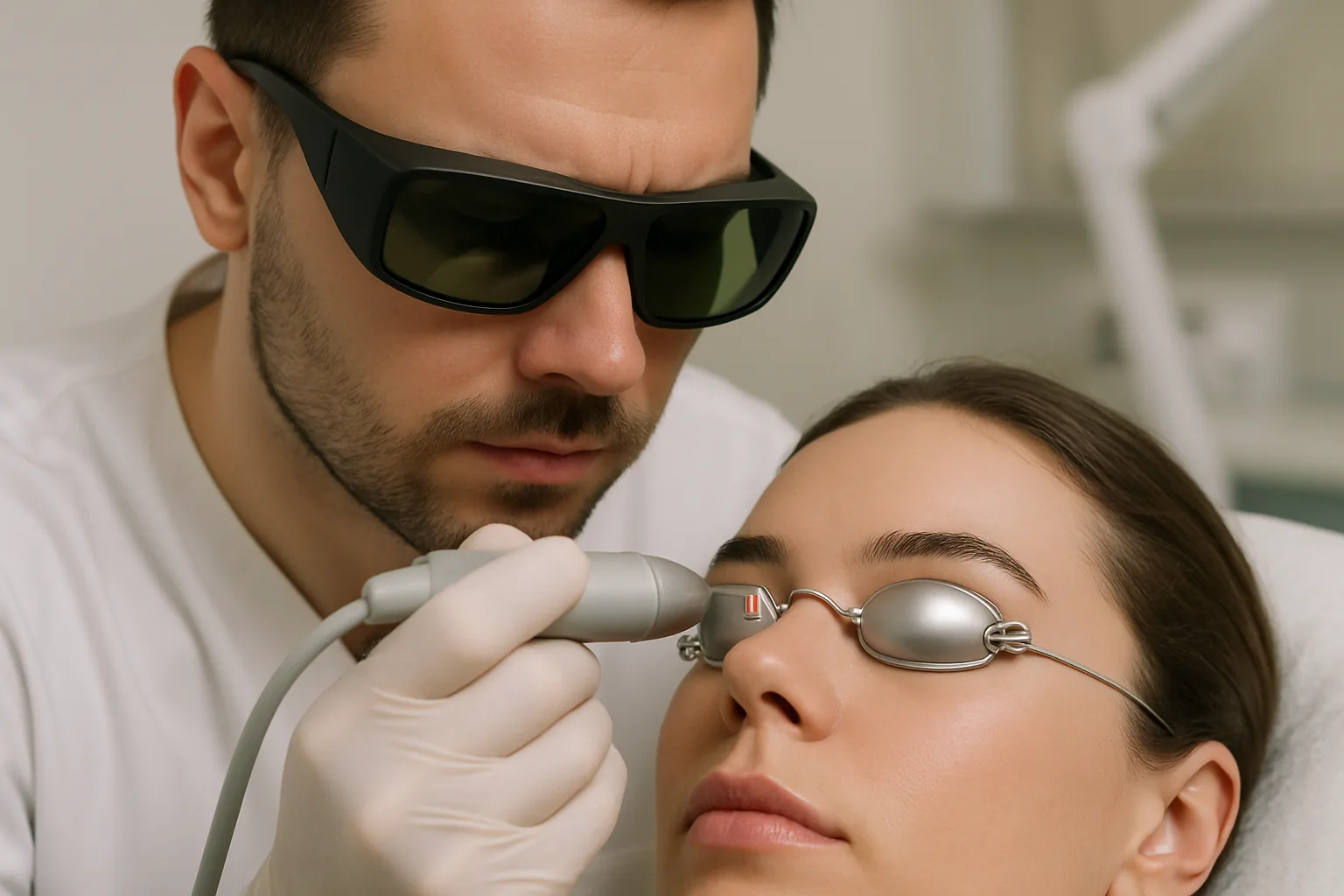
Laser is the route most people picture. A Q-switched or picosecond laser fires light that shatters pigment into fragments small enough for your body to carry away over the following weeks. It is effective, especially on dark pigment, and it reaches deep ink that gentler methods cannot.
It also carries a risk specific to cosmetic tattoos that every client should understand before booking. Many brow pigments contain iron oxide and titanium dioxide, the same metallic compounds that build flesh, pink, and tan shades. When a pigment-specific laser strikes them, the heat can chemically reduce those compounds and turn the spot instantly, stubbornly black or grey. Dermatologic Surgery describes this paradoxical darkening as a known hazard of lasering cosmetic tattoos, precisely because the pigments used in brows are the ones most prone to it. A reputable technician treats a small test spot first and waits to see how the pigment reacts. Never let anyone laser a full brow without that step. It is the single most important safeguard in the whole process, the removal world’s version of a patch test.
Two more cautions. Laser clears black first and leaves warmer colors behind, so a brow can look red, orange, or yellow partway through the course. And the heat that targets pigment can also scorch the brow hairs it passes through, thinning them. On deeper skin tones the laser can struggle to tell pigment from melanin, raising the risk of lightening or hyperpigmenting the surrounding skin, a concern covered in our guide to microblading on dark and deeper skin tones. Laser can also reawaken a dormant pigment allergy, occasionally triggering the kind of delayed bumps and granulomas we cover elsewhere, because breaking the pigment apart exposes the body to it anew.
Saline Removal: Slower, Gentler, and Color-Blind
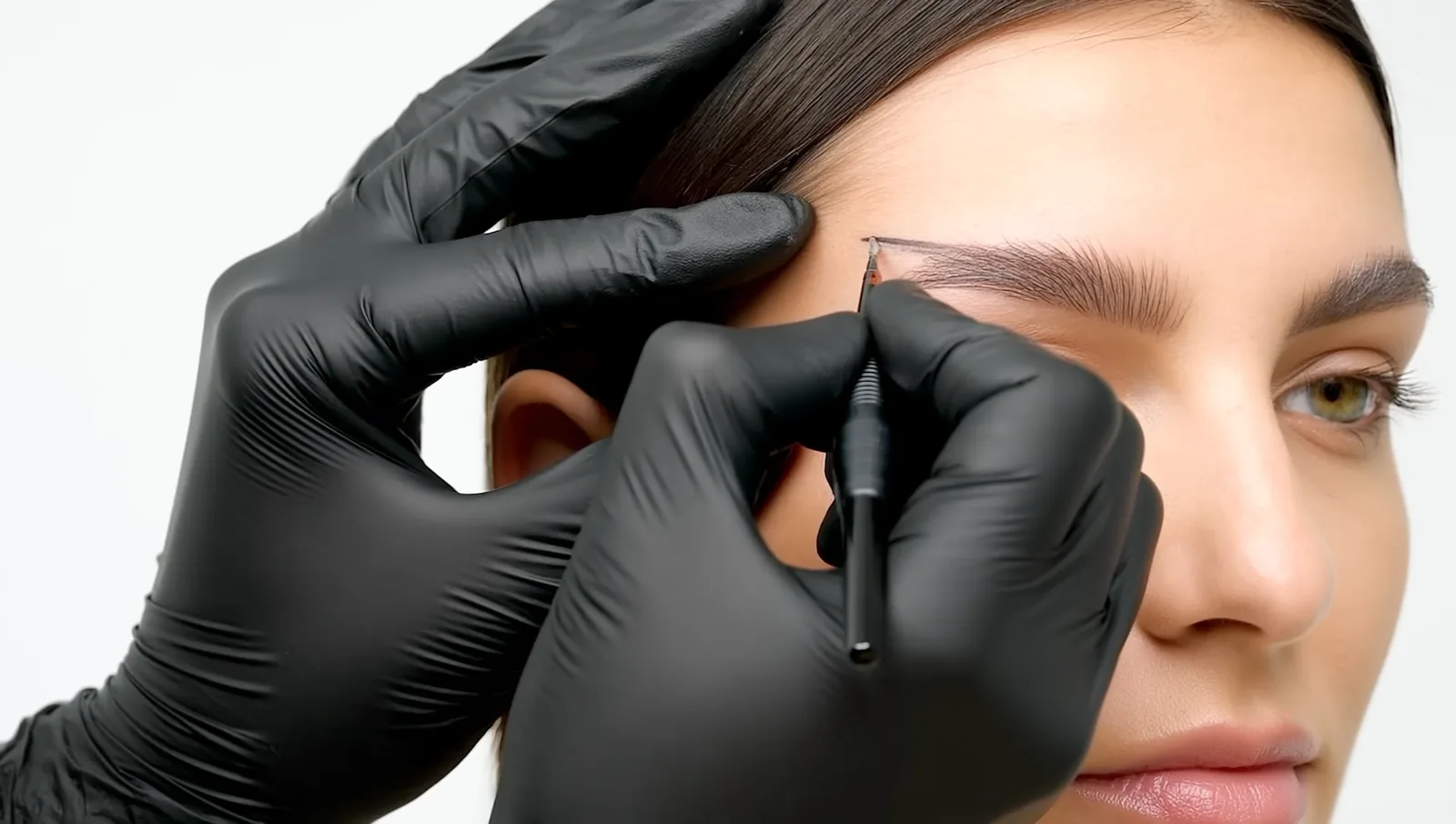
Saline removal works in the opposite direction. Instead of breaking pigment down where it sits, a technician uses a tattoo machine to implant a concentrated salt solution over the old strokes, creating a controlled wound. As it heals, osmosis draws the pigment up and out with the forming scab, and each scab that sheds takes a little color with it.
Its great advantage is that it does not care what color the pigment is. Where laser plays favorites with black, saline lifts the full mix, black, red, yellow, and white alike, which is why it is often the better first move for the muddy, multi-color fades that plague old brows. It is gentler on the surrounding skin, preserves the natural brow hair, and many removal specialists, including the brand Botched Ink, advise starting with saline and reaching for laser only if stubborn black pigment remains. Saline can even lift pigment trapped under scar tissue, where laser light cannot reach.
The trade-off is pace and skill dependence. Saline is a wounding process, so sessions must be spaced well apart to let the skin recover, and an aggressive or undertrained hand can scar. It usually takes several rounds to see real lightening, and it rarely erases dense work completely.
Color Correction and Camouflage
The third route does not remove pigment at all. A corrective permanent-makeup artist uses color theory to neutralize an unwanted tone, laying a complementary pigment over the old one so a blue-grey brow reads neutral again, or rebuilding natural-looking strokes over a faded base.
It is the fastest, least invasive fix when the problem is genuinely just color and the shape still works. But it has real limits. Correction adds pigment to skin that already holds too much, so it cannot rescue brows that are too thick, too dark, or misshapen. And “camouflage,” tattooing a skin-tone pigment over dark work to hide it, is the riskiest version. Flesh-tone pigments are heavy in the iron oxide and titanium dioxide that oxidize over time, and they can turn pink, orange, or grey of their own accord, sometimes leaving a patch that looks worse than the original. A conservative, color-theory-based correction by an experienced artist is reasonable. Heavy camouflage layered over a brow you should simply remove is a trap.
What Removal Really Costs: Money, Time, and Skin
Whatever route you choose, set realistic expectations. Sessions are spaced roughly 8 to 12 weeks apart to let the skin heal, so a full removal commonly stretches across six months to well over a year. Laser typically needs around six to eight sessions, saline often three to six, depending on how deep and saturated the original work was.
Per session, laser usually runs about $150 to $400 and saline roughly $100 to $250, but because each method needs several rounds, the total commonly lands somewhere between $600 and $2,000. Neither one reliably delivers a perfect, pigment-free brow. The realistic goal is significant lightening, enough to free you from the old look or to give an artist a clean enough base to rework over.
Both methods sting. Laser is often likened to a hot rubber band snapping against thin skin beside a sensitive eye. Saline burns during the pass and tightens as it scabs. Both can scar or leave pale, hypopigmented patches if pushed too hard or healed badly, which is exactly why session spacing and a careful practitioner matter far more than speed.
Starting Over the Right Way
Once the old pigment is light enough, you have a choice you did not have the first time: whether to redo your brows at all, and if so, how. Plenty of people who remove a heavy 2018 microblade never go back to blades. They move to a softer, more modern approach, or skip tattooing entirely in favor of brow serums and tinting. If you do want pigment again, the gentler machine methods that have largely replaced microblading are worth understanding first. Our guide to hairstroke brows walks through how they differ and why they tend to age better.
Three rules hold across every removal. See a board-certified dermatologist first if you have eczema, rosacea, keloid-prone skin, or any past reaction to a tattoo, because removal stresses the skin as much as the original procedure did. Choose a licensed, specifically trained removal technician rather than whoever is cheapest, since both laser and saline are regulated procedures where skill decides whether you heal clean or scarred. And insist on that test spot before any full treatment. Microblading was always semi-permanent rather than permanent, but as anyone mid-removal will tell you, semi-permanent can still mean years of living with a mistake. For the fuller picture of what can go wrong and who should avoid these procedures altogether, see our microblading risks and contraindications guide.
Sources
- Refinery29 on why so many people are undoing the brows they microbladed in 2018
- Botched Ink for how saline and laser brow removal compare step by step
- Dermatologic Surgery with why cosmetic tattoo pigments can darken under the laser
- New York Post covering the painful treatments people now endure to undo once-trendy brows
- RealSelf on what to do when you hate your microblading results