Microblading for Men: Shape, Density, and the Design Rules That Keep Brows Masculine
Published on August 4, 2026
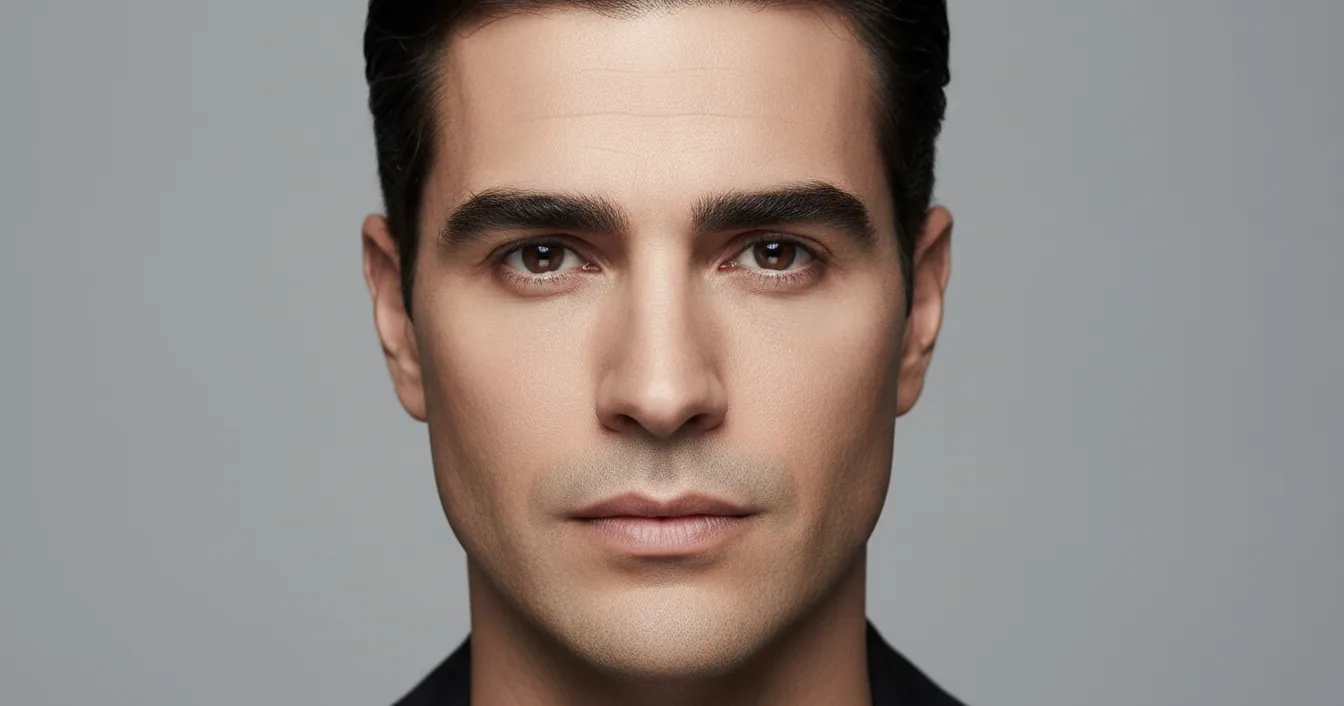
Male brow work is quietly one of the busiest corners of the permanent makeup industry, and almost none of the published guidance is written for it. Search microblading and you will find a decade of content built around a female client, a female face, and a mapping method designed to produce a lifted arch. Run that same template on a man and the result is not subtle. It reads as makeup, and it reads that way immediately, to everyone.
The technique itself does not change. Same blade, same pigment, same depth target, same healing biology. What changes is the design, the judgement about how much to add, and a skin type that behaves badly under a blade. Here is what men should be asking for, and what an artist trained on a female default needs to unlearn.
The Shape Rules That Do Most of the Work
Anatomy is the starting point. A male brow generally sits lower on the face, resting on or across the supraorbital ridge rather than floating above it. It is flatter through its length, thicker through the body, and it does not taper the way a styled female brow does.
The arch is where most male brow tattoos go wrong. On a masculine design the arch is a gentle rise rather than a peak, and its highest point sits further out toward the tail than the standard mapping method places it. The vertical difference between the brow head and the top of the arch should be small enough that a casual glance reads the brow as straight. Push that height up by even a couple of millimetres and the face changes expression permanently, usually toward looking surprised or quizzical.
The tail is the second tell. A female design typically carries a long, tapering tail that curves down and inward to a fine point. A masculine tail is shorter, straighter, and blunter, ending without much of a downward drop and without narrowing to a wisp. The brow head should stay soft and slightly diffuse too. A sharply squared front edge, which is a deliberate style choice on many women, looks drawn on a man every time.
The three-point mapping method that most artists learned still works. What has to shift is where the arch point lands and how high it is allowed to go.
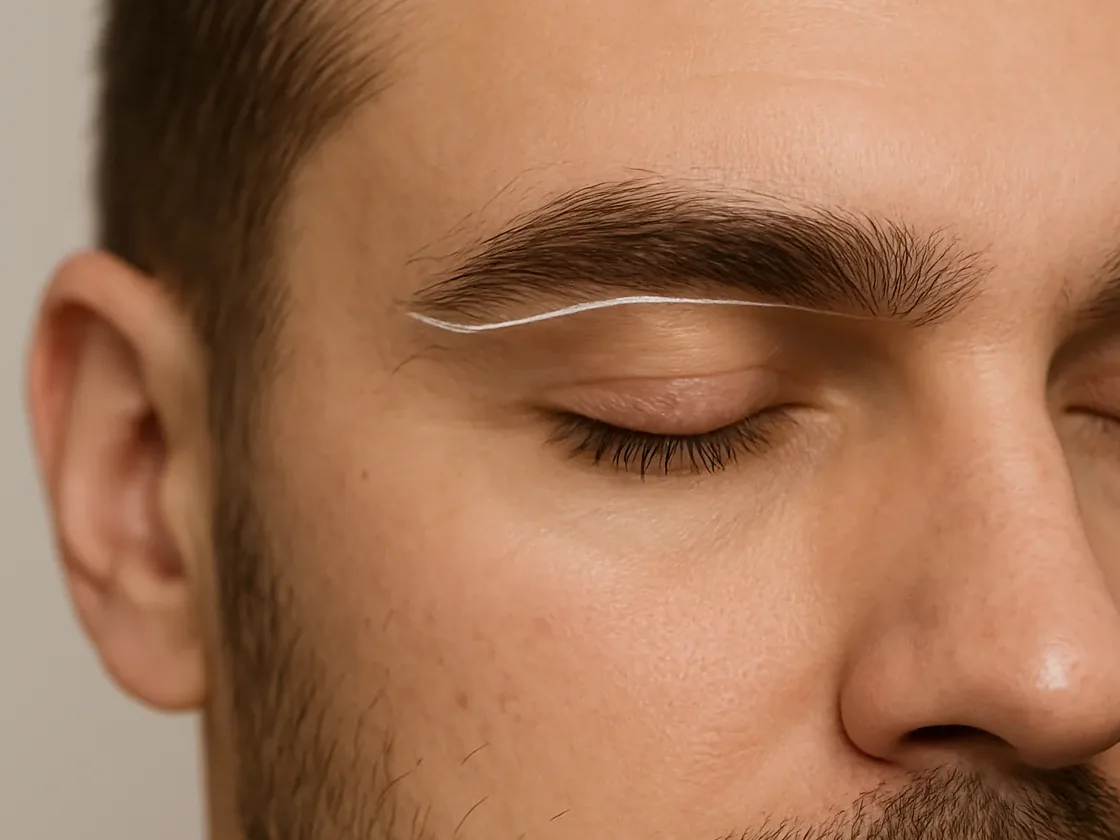
Density: Fill the Gaps, Do Not Build a Brow
There is a mental model difference here that matters more than any measurement. The classic microblading client has sparse or over-plucked brows and needs a brow constructed. The typical male client arrives with a substantial amount of brow hair already and one specific problem: a scar from a childhood injury, a gap, a tail that has thinned with age, patchy loss from alopecia or a chemotherapy course, or an old piercing site. The job is repair, not construction.
That reframing changes the density target completely. The failure mode for men is over-filling. When implanted strokes are denser than the real hair around them, the brow stops reading as hair and starts reading as a solid shape, and the effect gets worse once the hair is combed through and you can see pigment sitting behind it. Match the density that is already there, and when you are unsure, go lighter. Strokes can always be added at the perfecting session six weeks later. Taking them away means a removal appointment.
It is also worth saying plainly that microblading does not grow hair. It deposits pigment between the hairs you have. A man with extensive brow loss and very little remaining hair is often better served by soft shading, or by nothing at all, than by a full set of strokes drawn onto bare skin.
Thicker, Oilier Skin Is the Real Technical Problem
Male facial skin is measurably thicker than female skin, with denser collagen, and it carries larger, more active sebaceous glands driven by androgens. Both facts work against a blade.
Take thickness first. Tougher skin gives less clear tactile feedback, so an artist accustomed to female skin often cannot feel the stroke land and compensates by pressing harder. Push past the epidermis into the deeper dermis and the pigment spreads sideways through looser tissue instead of holding a line. That is a blow-out, and it looks like a soft grey or blue halo around what should have been a crisp hair stroke. It does not fade the way surface pigment does, because it sits below the depth the skin’s normal shedding cycle can reach. It is one of the more common reasons men end up researching removal a year later. The correct depth for a man is the same as for anyone else. The pressure required to reach it is not.
Then there is oil. Sebum pushes upward continuously and lifts freshly implanted pigment as it goes, which is why fine strokes on oily skin blur into a soft wash of colour within twelve to eighteen months. Our microblading by skin type pairing guide covers the mechanism in detail, and the conclusion does not change for male clients: if the brow area is genuinely oily, classic blade microblading is the weakest option on the menu. Nano brows and machine hairstrokes deposit smaller amounts of pigment with less trauma and hold noticeably better, and a combination approach that shades a sparse area rather than blading it is often the more durable answer.
A good consultation for a man with thick, oily skin frequently ends with the artist recommending against microblading. That is the correct answer, not a lost sale.
Stroke Direction Through Coarse Brow Hair
Male brow hair is thicker in diameter, usually longer, and considerably less organised in its growth pattern. Where a female brow often sweeps in a fairly predictable direction, male brow hair tends to spiral at the head, cross over itself through the body, and change direction partway along. The strokes have to follow whatever is actually growing, not an idealised pattern.
A few practical consequences. Map the direction with the client’s hair combed the way he wears it, not brushed up into a styled shape, because brushing it up hides the real growth pattern. Strokes should generally be slightly thicker and more widely spaced than on a female brow, so that an implanted stroke matches the diameter of the coarse hair sitting next to it. Vary the length and angle deliberately, since neat rows of identical parallel strokes are one of the most recognisable signs of tattooed brows. And place pigment into the gaps between hairs rather than over the hair itself.
Colour Should Match the Brow, Not the Head
Pigment selection for men runs more conservative. Warm or reddish tones that read as intentional grooming on a woman look like tinted product on a man’s face. Match the existing brow hair, which is commonly a shade or two darker than head hair, and choose for the healed result rather than the shade that looks right while wet. Avoid true black, which oxidises toward blue-grey over the years. For clients going grey, a neutral taupe holds up better than a cool ash tone, which tends to settle flat against the skin.
Healing Around Shaving, Hats, and the Gym
This is where a male routine collides with aftercare, and it deserves planning before you book rather than after.
Shaving comes up first. Keep a razor away from the brow area entirely for the full healing window, roughly ten to fourteen days. Shaving the rest of your face is fine. What you cannot do is drag a blade across the healing brow or clean up the space between the brows while scabs are still attached. An electric trimmer used well clear of the treated area is the safer option until healing finishes.
Sweat is the bigger threat. Salty moisture on healing skin softens scabs early and takes pigment with them when they lift, so heavy training, saunas, hot yoga, and hard outdoor work all need to pause for the same ten to fourteen days. This is the instruction male clients most often skip and the one that most reliably costs retention. The full protocol is in our microblading aftercare guide.
Then there is everything men put on their heads. A snug cap band, a hard hat suspension, a motorcycle helmet liner, or a headset sits right on the brow line, and friction there lifts scabs before they are ready. A cycling helmet rides higher, an inch or two above the brow, but it creates the other problem: trapped heat and moisture with nowhere to go but down across the brows. Helmet padding is rarely clean either. If your job or your commute puts something on your head every day, schedule the appointment so those first two weeks land in a stretch where you can avoid it.

Choosing an Artist and Setting Expectations
Ask specifically for healed photographs of male clients, not fresh work from the end of the appointment. Fresh brows look dark and sharp on everyone. What you want to see is a man’s brow at six weeks and ideally a year, so you can judge whether the shape held and whether it still reads as his own face. An artist with an entirely female portfolio may well be excellent, but you would be their learning curve on masculine shape.
The standard safeguards are not optional. Insist on a patch test before any pigment goes near your brows, confirm your artist is licensed and holds current bloodborne pathogen certification, and treat an unlicensed practitioner as a genuine safety risk rather than a bargain. This is a regulated procedure that breaks the skin, and our guide to microblading risks and contraindications covers what can go wrong. If you have eczema, rosacea, or seborrheic dermatitis around the brows, all of which are common in men, see a dermatologist before you book.
Finally, budget honestly. There is a perfecting session six to eight weeks after the first appointment and a colour refresh roughly once a year after that, because this is semi-permanent and it fades. Our two-year cost breakdown walks through the real total. Results vary substantially with the artist’s skill and your own skin, and no portfolio can promise you someone else’s outcome.
The measure of good male brow work is that nobody mentions it. Not a compliment, not a question, nothing at all. Shape that follows the ridge you already have, density that matches the hair already growing there, and a colour that reads as hair rather than product. Get those three right and the work disappears into your face, which is the entire point of it.
Sources
- The Kit on why a combination of strokes and shading outlasts blading alone
- Women’s Health for nano brows and their fit with oily and reactive skin
- Women’s Health with how microblading and microshading compare across skin types
- Cosmopolitan covering long-term pigment fade and how oily skin behaves
- CBC on the brow treatment options worth comparing before you commit
- Journal of Clinical Medicine documenting cutaneous adverse reactions linked to tattoos and permanent makeup