Henna Brows, Black Henna, and PPD: The Allergy That Follows You Into the Microblading Chair
Published on October 4, 2026

Henna brows get sold as the gentle rehearsal for microblading. No blade, no numbing, and the colour fades within weeks. For plenty of clients that is exactly what they are. The catch is the word “henna,” which on a brow menu can mean a plant stain with a long safety record or a paste built on hair dye chemistry, and nothing obliges a salon to print which one on a label you will ever see.
The chemical that matters is para-phenylenediamine, or PPD. It is what turns so-called black henna black, and it is found in many permanent hair dyes and in some brow and lash tints. Skin that meets it in the wrong form can become allergic to it, usually for life, and that allergy can surface years later at the hairdresser, at a tint appointment, or in the consultation chair before microblading. The short version: real henna rarely causes allergy, black henna and PPD tints are a different product with a different risk, and if you have ever reacted to either, your artist needs to know before anything touches your brows.
What “Henna” Means on a Brow Menu
Real henna is the dried, powdered leaf of the Lawsonia inermis plant, and it stains orange to reddish-brown. In a full review of its side effects, de Groot concluded that red henna “appears to be generally safe, with rare instances of contact allergy.” The colour range is the giveaway. The FDA points out that henna typically produces a brown, orange-brown, or reddish-brown tint, so other ingredients have to be added to get any other colour, and the British Skin Foundation puts it more bluntly: “There is no such thing as ‘black henna’.”
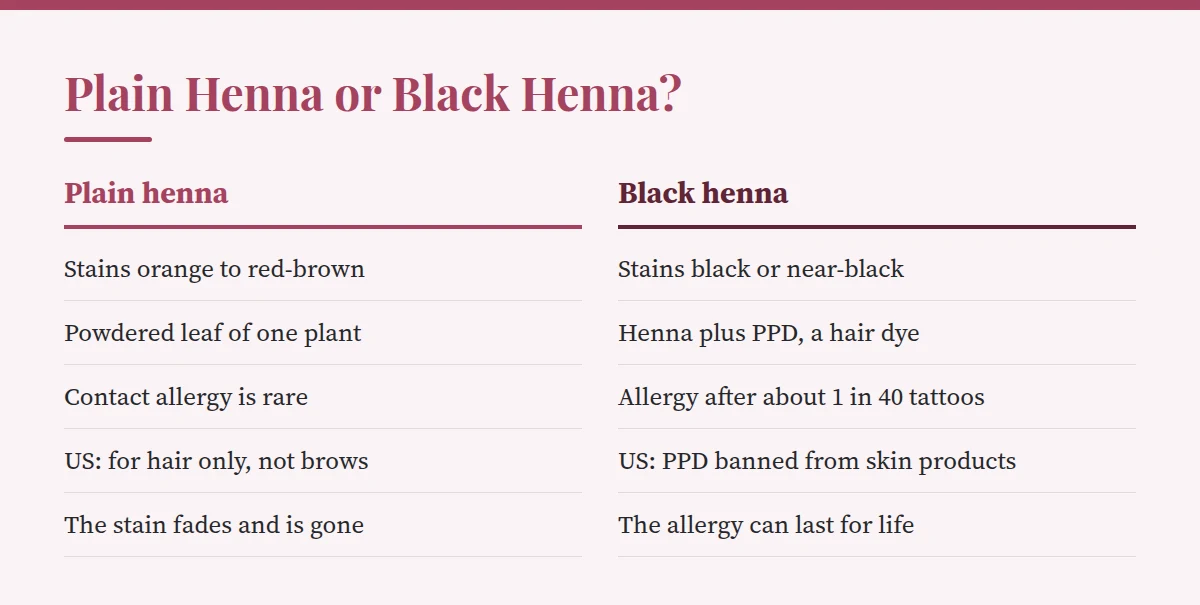
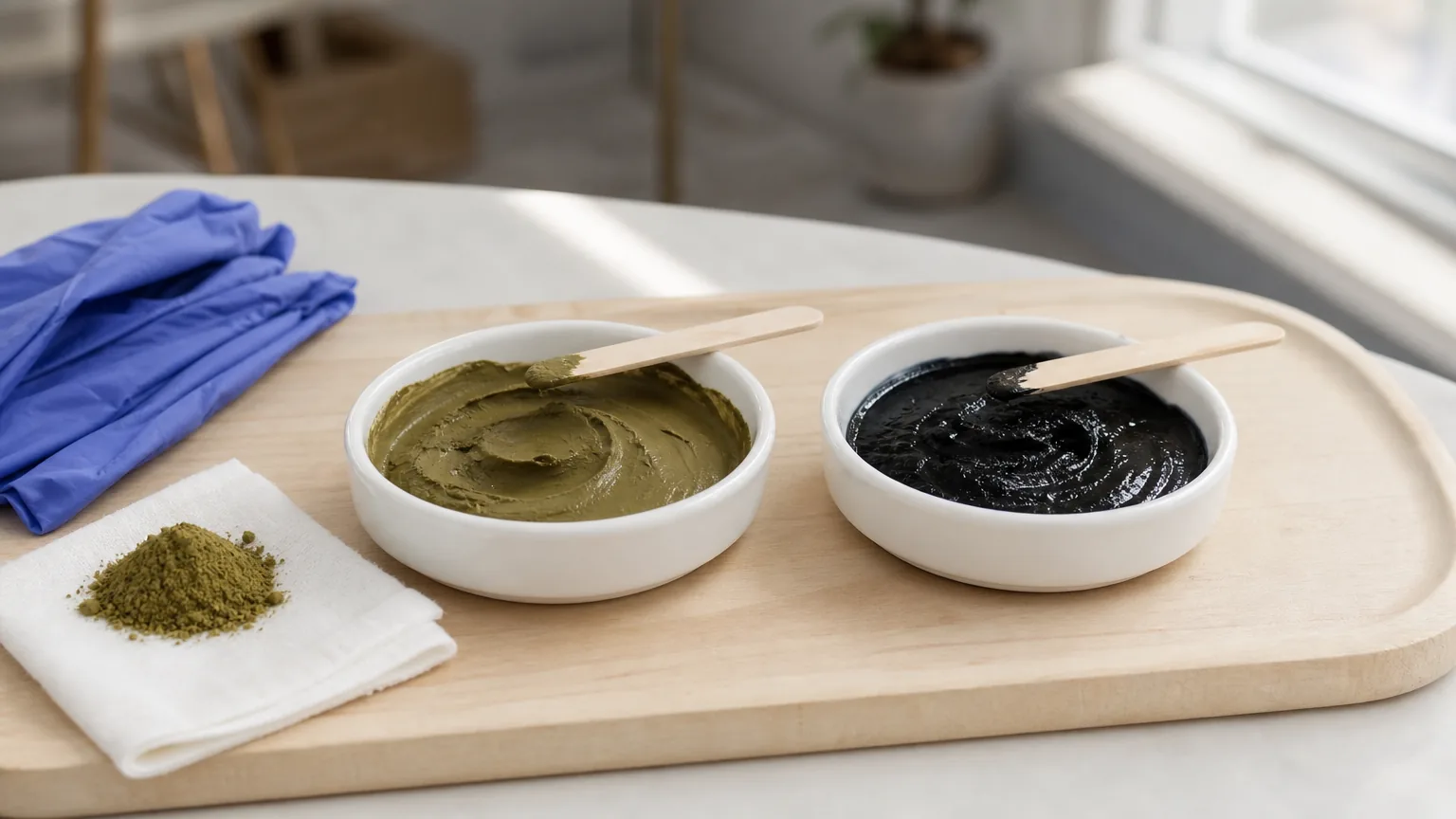
Black henna is henna, or sometimes no henna at all, combined with PPD, often from a coal-tar hair dye. The FDA’s fact sheet also warns that “even brown shades of products marketed as henna may contain other ingredients intended to make them darker or make the stain last longer on the skin.” That line matters for brows, because brow henna is sold in browns, and a shade card running from blonde through ash to black cannot come from a plant that only stains in the orange to red-brown range.
Two regulatory details are worth knowing. In the United States, henna is approved only as a hair dye, “not approved for direct application to the skin,” and PPD “is not permitted in cosmetics intended to be applied to the skin.” The federal listing for henna goes further and says it “may not be used for coloring the eyelashes or eyebrows, or generally in the area of the eye.” Henna brows stain the brow hairs and the skin beneath them on purpose, so even a pure product is being used outside its approval. And the rule requiring an ingredient list does not cover products used only by professionals, so a salon client may never see one unless they ask for the box.
How a Black Henna Tattoo Sensitises You
PPD is not equally risky in every form, and the way black henna delivers it is the problem. In hair dye, PPD is mixed with an oxidiser, left on for a set time and rinsed off, and DermNet notes that fully oxidised PPD is not a sensitiser, while the partially oxidised form is. Black henna paste skips that step. It puts unreacted PPD on the skin at unknown and often high concentrations and leaves it in long contact with the skin. As a Swiss allergy unit put it, “Both the long skin contact and the high concentrations of PPD increase the risk of sensitization.”
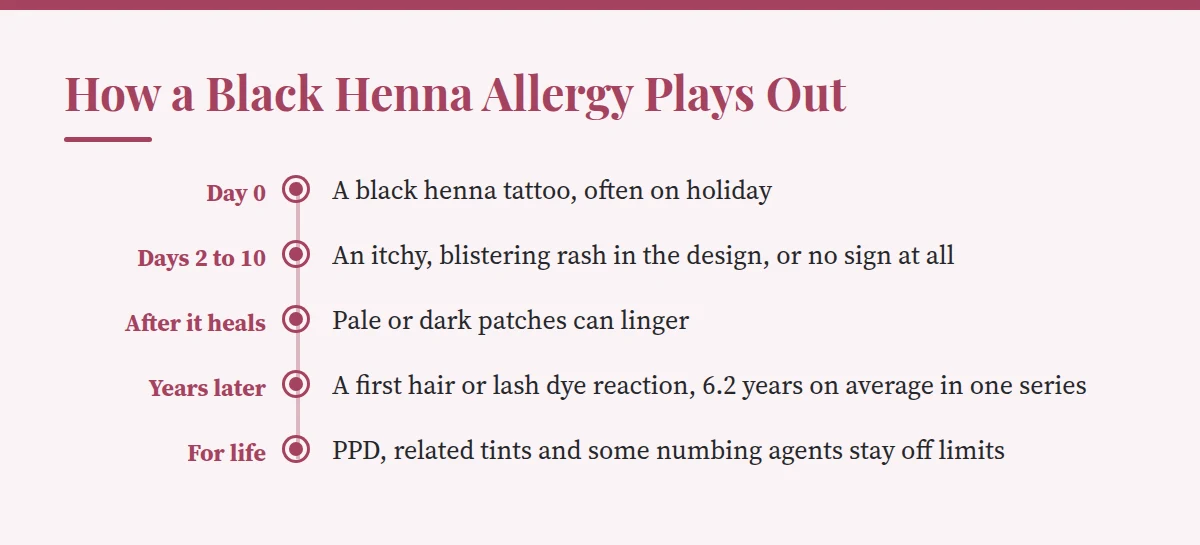
The first exposure can pass without a mark. In a pair of paediatric cases reported by Panfili and colleagues, one child had already been sensitised by an earlier henna tattoo that caused no visible symptoms, and the next tattoo set off the reaction. Reactions arrive days rather than minutes after application: those two children developed theirs 2 and 10 days after tattoos applied on summer holidays, in the shape of the design. De Groot estimates that black henna tattoos induce PPD allergy at a frequency of about 2.5 percent, roughly one tattoo in forty.

What makes this a microblading topic is how long it lasts. DermNet says that once the reaction subsides, “lifelong sensitisation to PPD is likely.” In a Basel series of seven patients who reacted to their first hair or eyelash dye, every one had a history of a black henna reaction, and the tattoo had come an average of 6.2 years before the dye. In Denmark, Søsted and colleagues described eight children aged 12 to 15 with severe allergic reactions to hair dye. Five were admitted to hospital, one of them to intensive care, and six had reacted to a temporary black tattoo before. The FDA states that black henna tattoos “contain PPD and may increase your risk of allergy to hair dyes,” and the NHS warns that anyone who has had one may be more at risk of a hair dye reaction.
What a Reaction Looks Like Around the Brows
PPD allergy is a delayed reaction. The NHS notes that hair dye symptoms “can take up to 72 hours to appear,” and DermNet describes each fresh exposure in a sensitised person as reacting faster, more severely and over a wider area than the last. Around the brows it follows a recognisable pattern. A mild reaction to hair dye usually shows up as “an itchy dry rash on the upper eyelids,” which is why a tint reaction can look more like an eyelid problem than a brow problem. More severe reactions bring marked redness, blistering and swelling of the eyelids, face and neck. On white skin the rash looks red; on brown and black skin, the NHS notes, it may look darker brown, purple or grey, or be harder to see.
Itch is the tell. Irritation from a harsh product stings quickly and stays where the product sat, while allergy itches, arrives a day or more later and can spread past the treated area, a distinction our guide to contact reactions in the microblading chair covers in depth. Swelling of the lips, tongue or throat, or any difficulty breathing, needs emergency care. A rash that keeps getting worse needs a doctor, who may refer you to a dermatologist for patch testing to name the culprit.
The aftermath can outlast the rash. DermNet lists darker patches, paler patches and scarring among the possible after-effects, and in both of Panfili’s young patients the pale patches persisted. For microblading that is a scheduling fact. An artist cannot judge your undertone, or predict how pigment will settle, on skin that is still inflamed or patchy, so the appointment waits until the skin has fully recovered, and any mark that lingers gets a dermatologist’s look first.
Why the History Follows You Into the Microblading Chair
Brow and lash tint. On paper, US law keeps hair dye away from brows. Every coal-tar hair dye must carry a caution that it “must not be used for dyeing the eyelashes or eyebrows; to do so may cause blindness,” and the FDA states that brow and lash dyeing “are not permitted uses of coal-tar hair dyes.” The only colour additive it has listed for brow and lash tint is silver nitrate, in professional-use products left on for no more than a minute. In practice, hair dye chemistry still finds its way to brows. One case report traced severe eyelid dermatitis and conjunctivitis in a 30-year-old woman to a permanent eyelash and eyebrow dye that contained PPD, a use the authors described as “illegal but seems to be a common practice.” The seven Basel patients reacted to hair or eyelash dye, an Italian report describes eyebrow dermatitis from two hair dye chemicals (m-aminophenol and toluene-2,5-diamine) in a patient sensitised by a black henna tattoo, and in a Budapest clinic about a third of PPD-allergic patients had current dermatitis linked to hair dyeing or brow and lash colouring.
Many clients tint their brow hairs after microblading so the hairs match the strokes, and some studios fold a tint into the touch-up. A PPD-allergic client should decline all of it, and “PPD-free” on a tint box is not a pass. According to DermNet, dyes built on toluene-2,5-diamine sulfate, a common PPD substitute, are tolerated by only about half of people allergic to PPD.
Numbing cream. PPD belongs to a family of “para” compounds, and the FDA’s list of things that can cross-sensitise with it includes “benzocaine and procaine, local anesthetics used by doctors and dentists.” Clinics see the overlap. Four of the seven Basel patients also reacted to benzocaine, and the Danish children who had reacted to black tattoos also tested positive to local anaesthetics, a pattern not seen in children whose reactions came from hair dye alone. Most brow studios numb with lidocaine, which belongs to a different chemical family, but some secondary blends add an ester such as tetracaine. A client with a PPD or black henna history should ask for an ester-free protocol and read the ingredient list of every numbing product, the second one included.
The rest of the list. The same FDA list names sulfa drugs, the PABA found in some sunscreens, rubber and latex products, and certain textile dyes, and de Groot adds that cross-reactions to other hair dyes and rubber chemicals are common. Few of these come up during a brow appointment, but they belong on the intake form, because they tell the artist this is a client whose immune system has already learned to recognise this chemical family.
The pigment, honestly. Here the evidence runs out, and it is worth saying so. Brow pigments are built mainly on iron oxides and other insoluble pigments rather than on hair dye chemistry (our pigment chemistry guide explains the families), and research has not shown that a PPD allergy on its own makes a pigment reaction more likely. Nor does a clear PPD test rule one out. A 2023 review of patch-tested tattoo patients from 1997 to 2022 found that tattoo allergy “cannot be reliably diagnosed via patch testing with today’s knowledge,” and that testing PPD and textile dyes “is not able to close this gap.” A PPD allergy is not an automatic no to microblading, then, and a negative PPD test is not a promise about pigment, the same limit our article on why a patch test can pass and brows still react explores for red and warm shades.
The artist’s own hands. The Basel authors warned that lifelong PPD sensitisation “can have occupational impact, especially for hair dressers and cosmeticians.” A brow artist who handles tint every day is in that group twice over: an allergy picked up from a teenage holiday tattoo can end their tinting work, and the FDA notes that people can also become allergic to PPD through occupational exposure. Gloves for every tint, not only for every tattoo.
How to Tell Plain Henna From a PPD Product
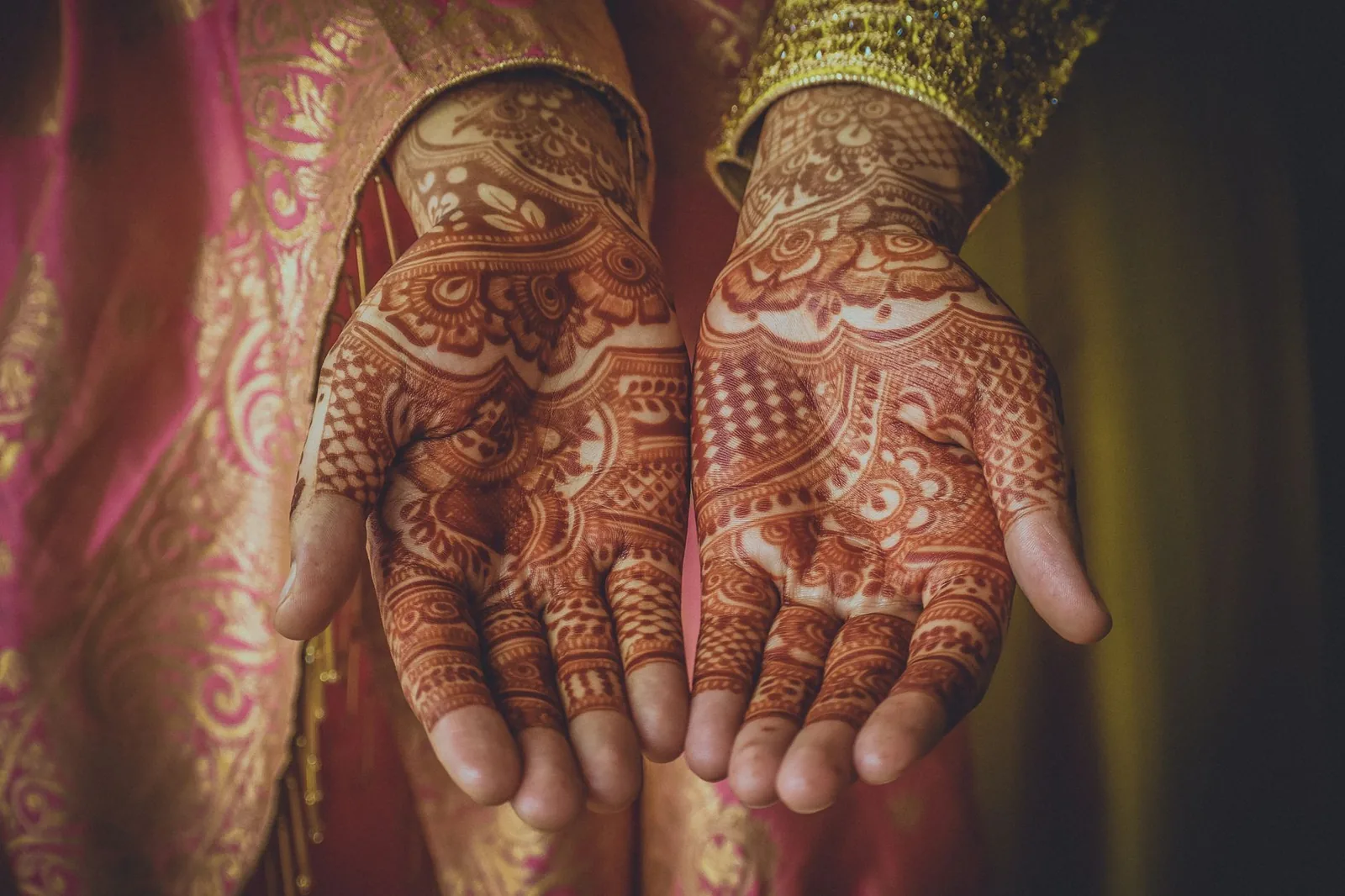
- Check the colour range. Real henna stains orange to reddish-brown. A black, grey, ash or cool-toned “henna” has something else doing the work.
- Ask what it is mixed with. Henna powder is mixed with water or another mild liquid. A product mixed with a developer is behaving like an oxidative dye, the same chemistry as hair colour.
- Ask to see the box. Look for p-phenylenediamine, toluene-2,5-diamine or its sulfate, and aminophenols. Professional products are exempt from the consumer ingredient label, so asking is often the only way to find out.
- Skin test before every tint, unless you already know. The FDA tells hair dye users to do the skin test before every use, while warning that “even if you don’t see a reaction to the skin test, it’s still possible to have a reaction.” If you already know you are allergic, a home test can only set off another reaction, so skip the product. Testing a known history belongs in a dermatologist’s clinic, where people who have reacted to hair dye or black henna are patch tested with a weaker PPD concentration to avoid a severe blistering response.
- Turn down black henna everywhere. DermNet’s advice is that black henna tattoos “should be avoided,” and that covers the holiday stall, the festival and the boardwalk. Young people on holiday are the usual customers, which is one more reason the tint options in our guide to microblading and minors come with a patch test attached.
What to Tell Your Artist, and What a Good Artist Will Ask
A thorough consultation asks about this directly, because clients rarely volunteer a holiday tattoo from years ago. The questions are short:
- Have you ever had a black temporary tattoo, and did it itch, blister or leave a mark?
- Have you reacted to hair dye or to a brow or lash tint, including itchy or puffy eyelids a day or two later?
- Have you been patch tested, and did PPD, toluene-2,5-diamine or benzocaine come up?
- Have you reacted to a numbing gel, a sunburn spray or a sulfa antibiotic?
A yes changes the plan more often than it cancels the booking. No tint now or at the touch-up, with a note on the client file so nobody adds one later. An ester-free numbing protocol, confirmed product by product. A wait if the reaction was recent, until the skin is clear and even in colour. And a referral to a dermatologist when the history is vague or the reaction was severe, because a patch test report naming the allergen is worth more than any amount of guessing. Our list of questions to ask before booking microblading covers the rest of a good consultation.
The Bottom Line
Henna brows can be a sensible, needle-free way to try a shape, as long as the henna is actually henna. Black or ash “henna” and some tints carry PPD, and one reaction can leave an allergy that reaches hair dye, brow and lash tint and some numbing agents for the rest of your life. Tell your artist about any black henna tattoo or hair dye reaction, however long ago, and be wary of a studio that never asks.
The usual ground rules hold. Microblading is a regulated procedure, and an unlicensed practitioner is a genuine safety risk. Insist on a patch test before any pigment goes in. See a dermatologist first if you have eczema, rosacea or a history of reactions around the eyes. And keep expectations realistic: results vary widely with the artist’s skill and your skin type, and microblading is semi-permanent, not permanent.
Sources
- U.S. Food and Drug Administration on henna, “black henna,” and why PPD is not allowed on skin
- FDA for coal-tar hair dye rules, the brow and lash warning, and PPD cross-sensitisers
- Code of Federal Regulations with the federal henna listing, which rules out brows and lashes
- Code of Federal Regulations covering silver nitrate, the colour additive listed for brow and lash tint
- NHS with hair dye reaction symptoms and its black henna warning
- DermNet on PPD allergy, its lifelong course, and the dyes that cross-react
- British Skin Foundation explaining why there is no such thing as black henna
- de Groot for a full review of henna and black henna side effects
- Kind, Scherer, and Bircher on hair and lash dye reactions years after black henna tattoos
- Søsted and colleagues with severe hair dye reactions in eight children
- Panfili, Esposito, and Di Cara for two children sensitised by holiday black henna tattoos
- Teixeira and colleagues on PPD found in a permanent eyelash and eyebrow dye
- Romita and colleagues with eyebrow dermatitis traced back to a black henna tattoo
- Pónyai and colleagues covering eight years of PPD allergy at a Budapest patch test clinic
- Schubert, Kluger, and Schreiver on why patch tests, PPD included, cannot reliably diagnose tattoo allergy