Before You Book Microblading: The Questions to Ask and the Things Clients Wish They Knew
Published on September 7, 2026
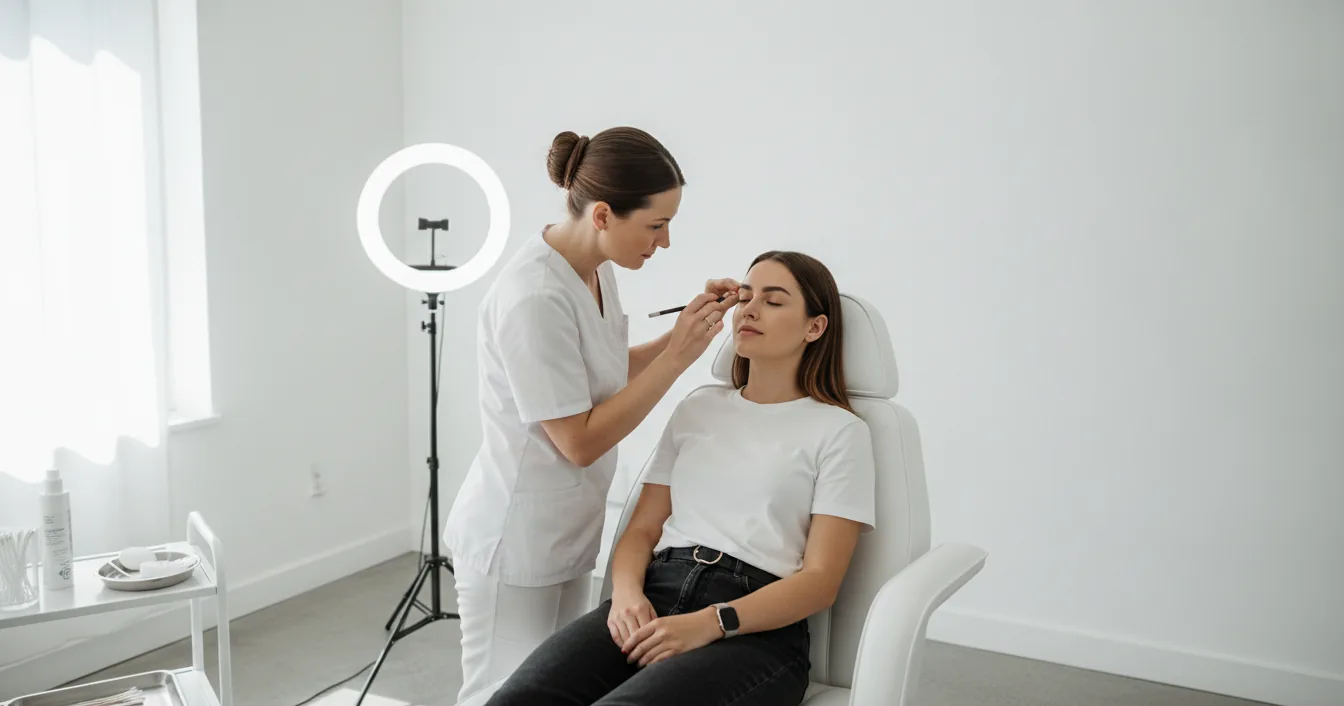
Almost nobody regrets microblading because the strokes were badly drawn. The regret stories that circulate online are mostly about something else: a decision made faster than it deserved, on information the client did not have until the pigment was already in. An Allure beauty writer who booked in 2017 described her salon as carrying “every green flag possible” and still wishes she had never done it, because five years later the shape she chose at 25 was not the shape she wanted at 30, and the so-called semi-permanent pigment had not gone anywhere. Her artist did nothing wrong. She just did not know what she was signing up for.
This is the conversation to have with yourself, and then with an artist, before you put down a deposit. Not what microblading is, which our FAQ already covers, but whether to book it and how to pick who does it.
The Question Nobody Asks First
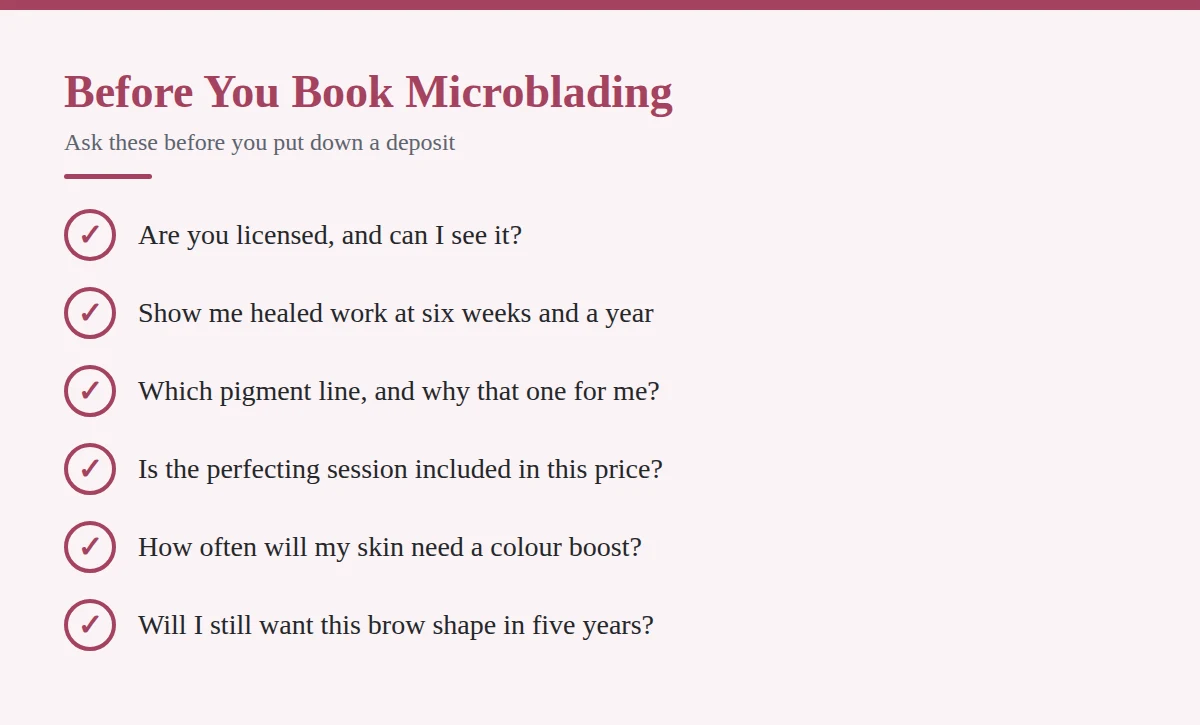
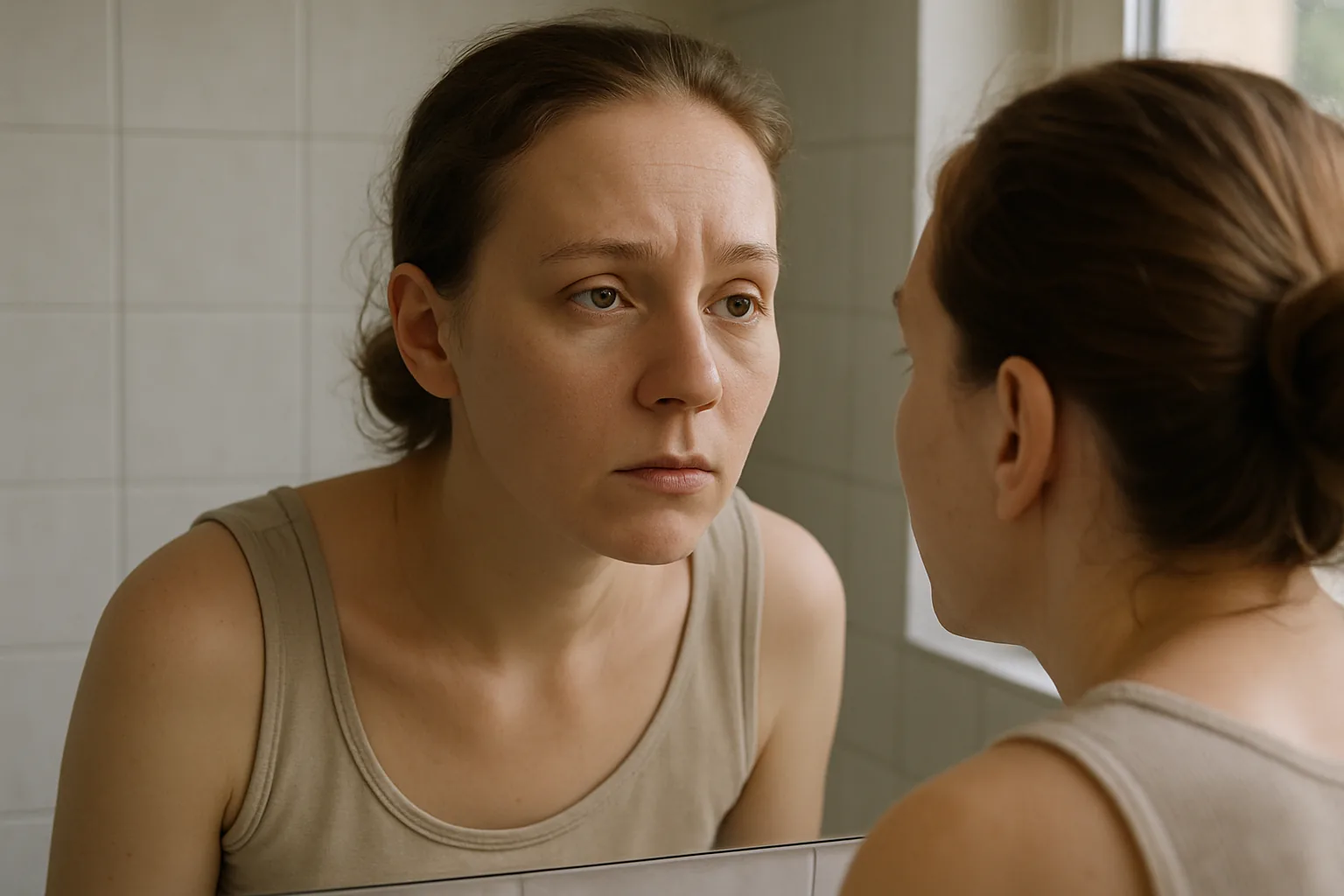
Every consultation covers shape, colour, and price. Almost none of them ask the question that produces the most regret: will you still want this brow in five years?
“Semi-permanent” is doing a lot of work in the marketing copy. Janine Wallace, a brow specialist quoted by Cosmopolitan UK, puts the honest range at two to four years before microblading even starts to fade, with plenty of clients still carrying pigment at three years having lost maybe half of it. Dermatologist Melanie Palm told Allure that pigments built on inorganic compounds, iron oxide and chromium oxide among them, are “much more likely to persist” than organic ones. Fading is not the same as disappearing, and a residual ghost of an old shape sitting under new natural growth is the single most common late complaint.
So before anything else, sit with the commitment rather than the result. If your brow taste has changed twice in the last decade, that is real information. If you are between 18 and 25, expect it to change again. Reading what microbladed brows actually look like at three, five, and seven years is a more useful exercise at this stage than scrolling fresh-work photos.
Four Questions That Separate Artists
Everyone’s portfolio looks good. These four questions do the sorting.
“Are you licensed, and can I see it?” Microblading is a tattoo procedure and is regulated as one in most of the United States, which usually means a body art or tattoo licence, bloodborne pathogen certification, and a premises inspected by the health department. What that framework does not do is verify artistry. An ABC7 I-Team investigation in Illinois found state officials inspecting shops and certifying technicians for bloodborne pathogen awareness while noting there were no microblading-specific regulations and no certification ensuring technicians actually know what they are doing. The department had written hundreds of warning letters to unregistered permanent cosmetics establishments. Treat the licence as the floor you refuse to go below, not as proof of skill.
“Can I see healed work at six weeks and at a year?” This is the highest-yield question on the list. Fresh microblading, photographed minutes after the session with the strokes still bold and the skin still pink, tells you almost nothing. Registered nurse Lana Schluter, who told ABC7 she has helped hundreds of people with permanent makeup problems, advises inspecting a technician’s “after” photos specifically to see how work looks once healed. An artist who cannot produce healed photos either has not been doing this long or does not like how their work settles. Ask for healed results on skin like yours, too, and on brows as sparse as yours.
“What pigment line do you use, and why that one for me?” You are listening for a specific brand and a reason connected to your colouring, not a shrug. Pigment choice drives whether brows drift blue, grey, or red over the years, and the chemistry behind that drift is worth understanding before you consent to it. Our guide to why brows turn blue, red, or grey covers what a good answer sounds like.
“How many of these have you done, and can you refer me to a client?” Dr. Murad Alam, professor and vice-chair of dermatology at Northwestern’s Feinberg School of Medicine, told the I-Team that people considering permanent cosmetics should confirm their technician has completed a number of successful procedures and come referred by someone trusted who had a good outcome. He added the part that skews everyone’s perception of risk: complications are underreported, because “people are reluctant to talk about something that they find embarrassing.”
What a Real Consultation Looks Like
A proper first appointment runs 90 minutes to two hours, and only about 30 to 45 minutes of that is the procedure itself. The rest is paperwork, medical history, and mapping. If a studio can get you in and out in an hour, something in that list is being skipped.
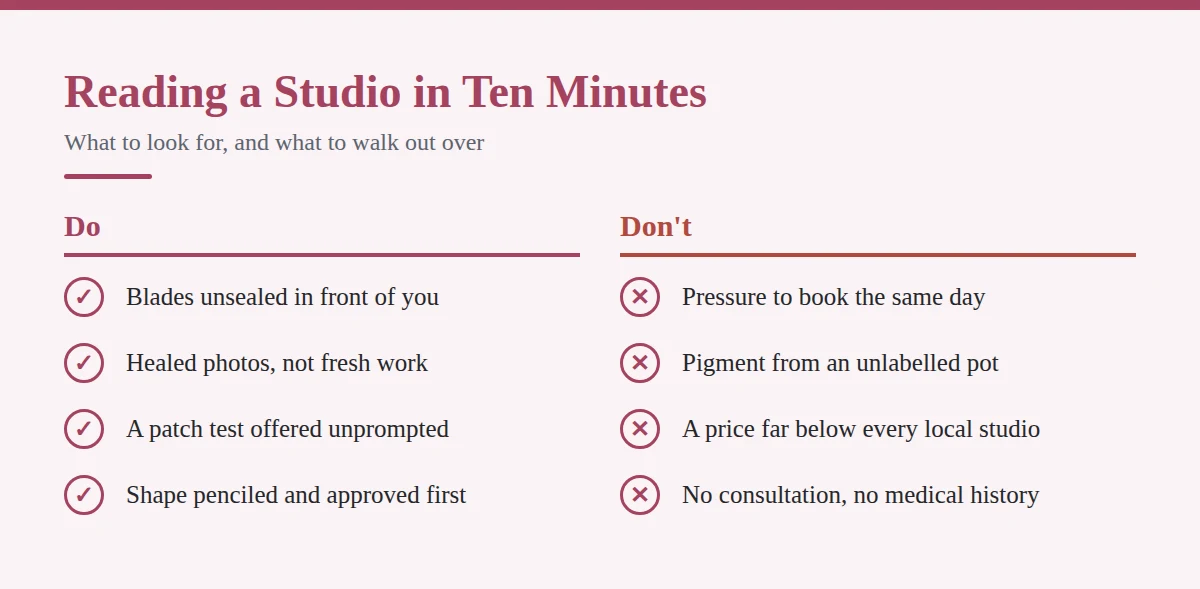
Expect a patch test to be offered before any pigment goes into your face. Expect a full medical history, honestly answered, covering skin conditions, medications including blood thinners and retinoids, autoimmune diagnoses, and anything that would change candidacy. If brow loss has a medical cause behind it, say so at this stage rather than at the chair, because it changes the plan considerably. Our guide to microblading for medical brow loss covers what clearance should involve.
Then comes the drawn outline, and this is the moment with the most leverage you will ever have. The artist maps and pencils the full shape before a blade comes near you, and you are entitled to look at it in a mirror and ask for changes. A Glamour writer who documented her first session described spending the hour before the procedure watching her artist draw the shape stroke by stroke, then being asked directly what she liked and disliked. That question should be asked of you. If it is not, ask it of yourself out loud.
Bring reference photos, but hold them loosely. Brows frame your specific face, and the arch that suits someone else’s bone structure will not transfer. What is worth more than inspiration images is checking that the artist’s own style matches the result you want. If you are after a soft, dense, filled-in look rather than crisp individual hairs, Wallace’s advice is blunt: that is a powder or ombre brow, not microblading. Packing strokes densely to fake fullness is precisely what causes them to bleed together into a blocky wash years later.
The Price You Are Quoted Is Not the Price You Pay
The quoted figure is one appointment. Microblading behaves like a subscription: an initial session, a mandatory perfecting visit six to eight weeks later, and a colour boost every year or two after that. Ask specifically whether the perfecting session is included, because that single answer moves your total by hundreds of dollars.
Ask what a boost costs, and ask the artist to estimate how often your skin will need one, since oily skin can need maintenance roughly twice as often as dry. We work through the full arithmetic in the true two-year cost of microblading, and the honest version of this question is whether you are comfortable with the two-year number, not the deposit.
Pain, Swelling, and the Weeks Nobody Photographs
Microblading is not painless, but with topical numbing applied and given time to work, most clients describe scratching and pressure rather than pain. The Glamour account calls it “a bit uncomfortable,” like a tiny scratch, with tingling through the following day once the numbing wears off. If you are needle-averse, know that the discomfort is usually not the hard part.
The hard part is days one through ten. Your brows go dramatically, unrecognisably dark for roughly the first four days, darker than the day you left the studio, and there is nothing to be done but wait. Then they scab and flake, then around week three the colour appears to vanish entirely before returning. Full healing takes six weeks. Plan for it socially: no swimming, no sweating, no saunas, no makeup on the area, no getting them wet for the first stretch, and retinol paused for about two weeks either side. If you have a wedding, a holiday, or a photographed event coming up, count backwards properly. Our day-by-day healing timeline shows exactly which week looks like what.

Red Flags Worth Walking Out Over
Pressure to book on the day of the consultation. No patch test offered. No consultation at all. A portfolio of fresh work only. Pigment decanted from an unlabelled pot. Reused blades, or tools that were not opened from sealed packaging in front of you. A price far below every other studio in your area, which usually means training, supplies, or time is being cut somewhere. And an artist who answers “will this suit my skin?” without asking about your skin first, when skin type is the strongest single predictor of how long strokes stay crisp. Our skin type pairing guide covers which techniques suit which skin, and why some results fade years early explains what happens after healing ends.
Booking From an Honest Baseline
Microblading done well by a licensed artist on suitable skin is a genuinely good outcome for a lot of people, and most clients are happy. The ones who are not usually made an eight-hundred-dollar decision on a fifteen-minute impression, and results vary substantially by artist skill and skin type in ways no online review captures.
So take the consultation as a consultation. Book two of them at different studios if you can, ask all four questions, look at healed work, and go home before deciding. If you have eczema, rosacea, psoriasis, or any active skin condition on or near the brow, see a dermatologist before you see an artist. And know the exit route before you take the entrance: removing or correcting bad microblading is slow, expensive, and imperfect, which is the strongest argument there is for spending an extra week choosing.
Sources
- Glamour on what a first-timer wishes she had known before her appointment
- Allure with a five-year account of regretting microblading that never faded
- ABC7 Chicago investigating how thinly permanent cosmetics are actually regulated
- Cosmopolitan UK for why densely packed strokes go blocky and blue over time
- Prevention covering how long a first appointment really takes and what fills it